
Why did two health apps give me different heart rates from the same camera?
Discover why two apps can show different heart rates from the same camera. Learn how underlying vitals engines and algorithms cause camera heart rate accuracy difference.
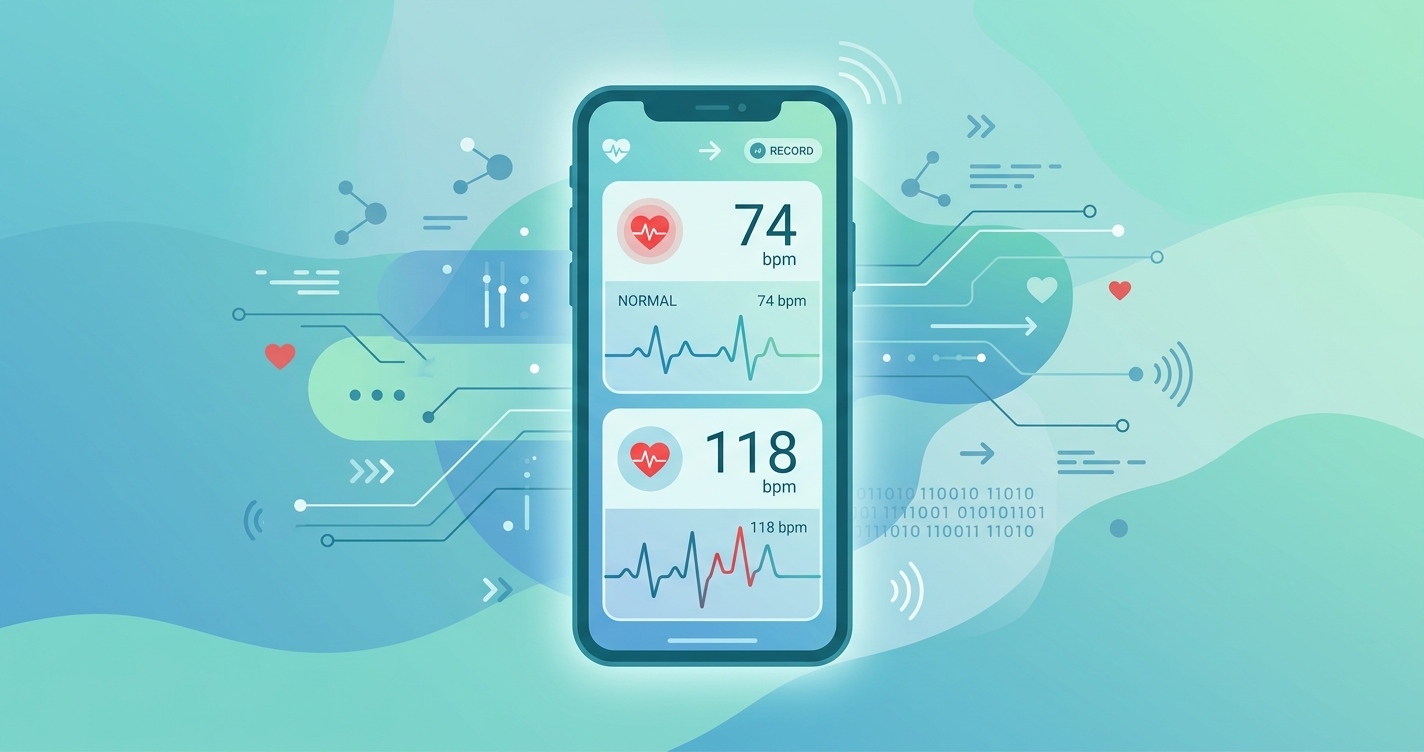
It is a common and confusing experience for users of digital health applications: you measure your heart rate with one app, then try another, and get two different numbers. Both apps used the same phone, the same camera, and the same person in the same environment. This discrepancy isn't necessarily a sign that one app is "wrong" and the other is "right." Instead, it highlights a crucial reality of the digital health market today. The accuracy and consistency of camera-based measurements are determined by the underlying signal processing engine, not the consumer-facing brand of the app itself. The camera heart rate accuracy difference between two applications often comes down to the quality and specialization of the technology partner they chose to license.
"A study involving 562 participants using a non-contact, camera-based mobile application demonstrated excellent accuracy for heart rate, with a Mean Absolute Error (MAE) of 2.96 and an accuracy level of 99.1% compared to standard devices." (Paruchuri, et al., National Institutes of Health, 2021)
The engine under the hood: explaining camera heart rate accuracy difference
The technology that allows a smartphone camera to measure heart rate is known as remote photoplethysmography (rPPG). It works by detecting subtle changes in the color of light reflected from the skin, which correspond to the pulsing of blood flow. Turning this raw optical data into a reliable heart rate number requires sophisticated signal processing and machine learning algorithms. Very few application developers build this technology from scratch. Instead, they license an rPPG Software Development Kit (SDK), a "vitals engine", from a specialized technology provider.
This business model is why two apps can produce different results. They are likely using two different engines, each with its own proprietary algorithms for handling common challenges. A camera heart rate accuracy difference is the direct result of how each engine's code manages variables like lighting changes, minor user movements, and differences in skin tone. The app's brand is merely a wrapper around this core technology. For digital health founders and product managers, selecting the right engine partner is one of the most critical decisions, directly impacting user trust and the credibility of the data their platform provides.
| Feature / Factor | Standard rPPG Engine | Advanced rPPG Engine | Impact on Accuracy |
|---|---|---|---|
| Motion Artifact Handling | Basic filtering; may fail with slight head turns or talking. | Uses advanced AI models to isolate the cardiac signal from motion noise. | High |
| Lighting Correction | Requires stable, bright, front-facing light. | Actively compensates for low light, shadows, and changing conditions. | High |
| Supported Skin Tones | Trained on limited datasets, leading to lower accuracy on darker skin tones. | Trained on diverse, global datasets to ensure equitable performance. | High |
| Signal Processing | Basic frequency analysis (e.g., FFT) to find the dominant pulse. | Uses machine learning and temporal models to reconstruct the pulse wave. | Medium |
| Camera Frame Rate Tolerance | Requires a stable 30 or 60 FPS video stream. | Can adapt to variable frame rates common on lower-end devices. | Medium |
| Region of Interest (ROI) | Uses a simple, fixed facial box (e.g., forehead). | Dynamically identifies multiple skin patches for a more robust signal. | Low |
Industry applications: why engine choice matters
The choice of an underlying rPPG engine has significant strategic implications for any company building a health or wellness application. The decision is not merely technical; it shapes the product's market position, target audience, and ultimate utility.
### telehealth and remote patient monitoring
For telehealth platforms, data integrity is critical. A provider making a remote assessment needs to trust the vital signs presented to them. If an engine has a wide variance in accuracy, it undermines the clinical utility of the entire platform. This is why forward-thinking telehealth companies seek technology partners that can provide evidence of their performance across different populations and conditions.
### corporate wellness and fitness apps
In the wellness market, user engagement is key. An app that gives inconsistent readings or frequently fails to acquire a signal will be quickly abandoned. Here, an engine's robustness, its ability to work in real-world settings like an office or a gym, is more important than achieving precision to the final decimal point. The goal is reliable trend-tracking, not diagnostic measurement.
### digital health startups
Startups face a "build vs. license" decision. Licensing a mature, high-performance rPPG engine allows a startup to go to market faster and focus its limited resources on its unique value proposition and user experience, rather than trying to solve the complex computer vision and signal processing problems from scratch. The right engine is an accelerator, not a cost center.
Current research and evidence
The scientific community has extensively studied the factors influencing rPPG accuracy. Research by Peng, et al. (2022) confirmed that motion artifacts and lighting variations are the two most significant sources of error in camera-based measurements. Their work highlights the importance of the algorithms used for noise cancellation. Another study published in the journal Nature in 2023 by a team at Google Research found that while rPPG could achieve high concordance with standard pulse oximeters, performance equity across different skin tones was a major challenge. The researchers noted that models trained on more diverse datasets showed significantly lower error rates for individuals with darker skin pigmentation.
This body of research underscores that not all rPPG solutions are created equal. The level of investment in research and development by the engine provider is a key determinant of the final product's performance and reliability.
The future of contactless vitals monitoring
The technology behind camera-based vitals is not standing still. The next generation of rPPG engines is moving beyond just heart rate. Emerging capabilities include the measurement of respiratory rate, blood pressure, and even blood glucose levels, all from a standard video stream. These advancements are being driven by more powerful machine learning models and the availability of vast datasets. As the technology matures, the gap between consumer-grade wellness apps and platforms with serious healthcare applications will widen. The winners will be those who build their products on a foundation of robust, evidence-backed science.
Frequently asked questions
Q: Can my phone really measure my heart rate as well as a medical device?
A: While smartphone camera measurements are becoming increasingly accurate, they are generally intended for wellness tracking rather than as a substitute for medical-grade devices. The accuracy depends heavily on the app's underlying technology and environmental factors.
Q: Why does the app need good lighting to work?
A: The app's camera measures heart rate by detecting tiny changes in light reflected from your skin's blood flow. Dim or unstable lighting makes it much harder for the algorithm to distinguish this cardiac signal from background noise, which can lead to inaccurate readings.
Q: Does it matter if I move while taking a measurement?
A: Yes, movement is a major source of error. Even small motions like talking or turning your head can disrupt the signal that the camera is trying to read. For the best results, you should remain as still as possible during the measurement.
Q: Are all camera-based heart rate apps the same?
A: No. The user-facing app is often different from the core technology engine performing the measurement. Different apps may license engines from different providers, leading to a significant camera heart rate accuracy difference.
For digital health founders and product managers, the lesson is clear: the technology partner you choose for your contactless vitals engine will define the credibility and performance of your application. If your organization is comparing technology partners for a custom build, Circadify's platform is designed to address the core challenges of accuracy and reliability in the remote monitoring space. Explore a potential partnership at circadify.com/custom-builds.