
White-Label Health Platform Demo: 8 Things to Ask For
Discover the 8 essential questions to ask during a white label health platform demo. Learn how to evaluate accuracy, data ownership, and integration timelines.
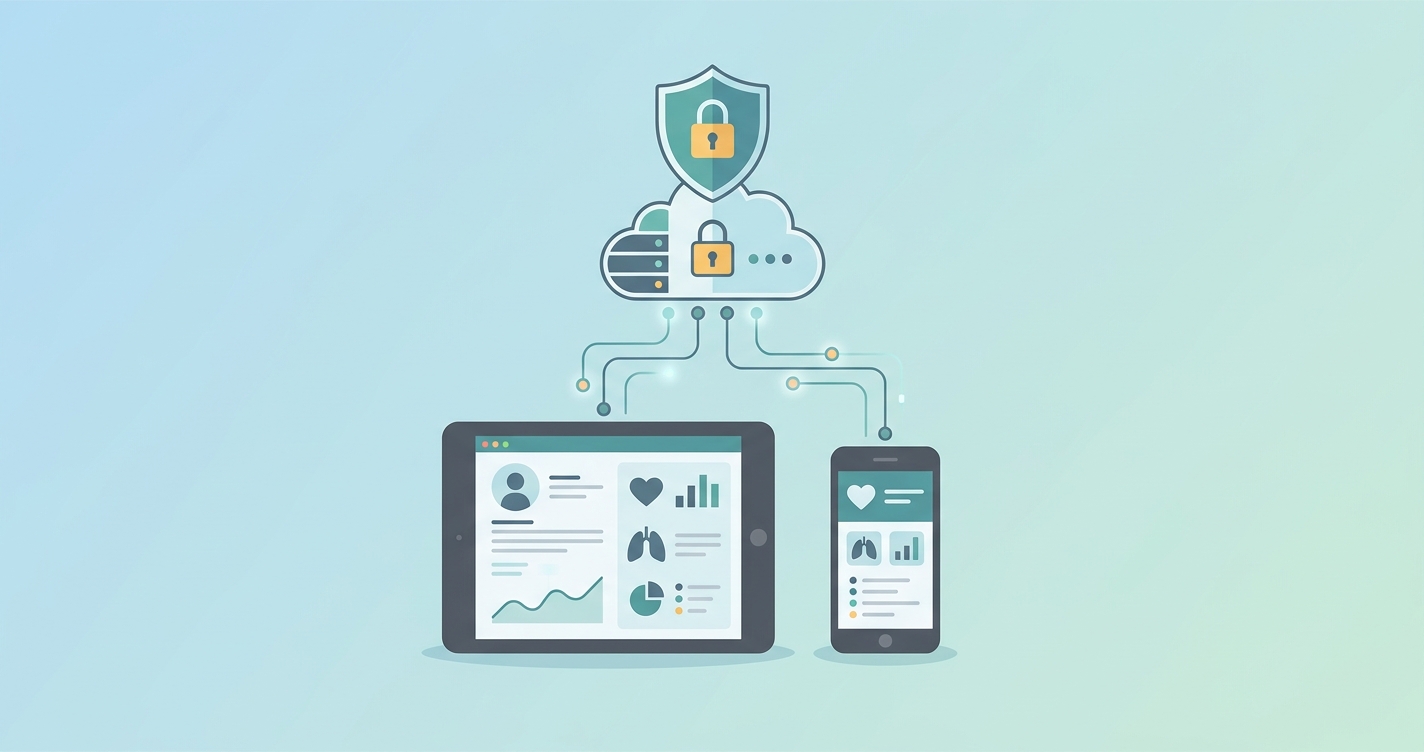
Procurement cycles for digital health infrastructure often follow a predictable and exhausting pattern. When scheduling a white label health platform demo, a clinical or technical team has usually identified a gap in their remote monitoring capabilities, secured a budget, and prepared to sit through weeks of polished vendor presentations. The core challenge for telehealth product managers, hospital IT directors, and digital health startup founders is separating clinical reality from controlled marketing environments. When evaluating camera-based vital sign monitoring technologies, specifically remote photoplethysmography (rPPG), standard software evaluation criteria fall dangerously short. Buyers must enter these meetings prepared to break the software, asking targeted questions about algorithmic bias, edge-case handling, and true integration timelines.
"Most purchasers of digital health solutions rely on internally developed criteria for evaluation, with bidirectional EHR integration, proven return on investment, and patient satisfaction ranking as mandatory requirements before finalizing vendor selection." - KLAS Research, 2023
Navigating the white label health platform demo environment
When entering a white label health platform demo, buyers are typically evaluating a custom branded vitals app or a software development kit (SDK) intended to merge with an existing telehealth portal. The vendor's primary objective during this hour is to present a frictionless user experience. The buyer's objective must be to introduce friction.
A standard presentation will feature a stationary subject sitting in a well-lit office, resulting in a clean heart rate or respiratory rate extraction. However, real-world patients use digital health applications in varied lighting, while walking around their homes, and across a complete spectrum of skin tones. If a health platform OEM technology only works perfectly under studio conditions, it will generate support tickets and clinical frustration when deployed to a broad patient population.
Organizations that fail to pressure-test the technology during the procurement phase often find themselves locked into contracts for software that requires massive engineering overhead to function properly. To avoid this, technical buyers must shift the conversation away from standard feature lists and toward raw performance metrics, data governance, and operational reality.
| Evaluation Area | Surface-Level Demo | Deep Evaluation Requirement |
|---|---|---|
| Algorithmic Accuracy | Resting heart rate in standard lighting | Measurement during minor motion and varied lighting |
| Platform Customization | Adding a static logo to a pre-built interface | Full UI control and custom user onboarding workflows |
| Data Handling | Vendor provides a generic dashboard of results | Raw data access and secure, direct cloud routing |
| System Integration | Basic API documentation provided | Bidirectional HL7/FHIR compatibility proven |
| Speed to Market | Verbal promise of a launch in days | Service level agreement (SLA) on deployment time |
8 essential questions for your vendor evaluation
1. How does the system handle diverse skin tones and low light?
Algorithms trained on narrow datasets struggle when deployed to a diverse patient population. Because remote photoplethysmography relies on capturing micro-variations in light bouncing off the skin, darker skin tones (higher melanin levels) and low-light environments present technical hurdles. Ask the vendor to demonstrate the rPPG white label solution using subjects with different Fitzpatrick skin types or ask them to dim the lighting during the live call. Request their internal validation data regarding demographic parity.
2. What happens during user motion or talking?
Camera-based vitals rely on tracking a steady region of interest on the human face. If the user shifts their weight, adjusts their phone, or talks, the signal can degrade rapidly.
- Ask the presenter to read a sentence out loud while the measurement is actively running.
- Inquire about the system's error state: does it fail gracefully with a user prompt to hold still, or does it present a highly inaccurate reading?
- Request engineering data on how the system filters out signal noise caused by standard patient movement.
3. What are the strict limitations of the branding customization?
A telehealth white label vitals solution must feel entirely native to your existing digital health ecosystem. Many vendors offer basic logo placement and superficial color swaps, but restrict deeper user interface changes. Ask for a demonstration of deep customization. You need to know if your front-end developers can modify the user onboarding flow, change the layout of the measurement screen, and alter localized language strings to match your brand voice.
4. Who assumes ownership of the raw data stream?
Data ownership is a critical compliance and security variable. During the white label health platform demo, clarify the exact path the biometric data takes.
- Ask if the vendor stores any patient biometric video feeds or metadata on their own servers.
- Confirm if the platform operates as a true passthrough, sending encrypted vital signs directly to your designated cloud environment.
- Request immediate documentation on their Business Associate Agreement (BAA), HIPAA compliance, and GDPR frameworks.
5. Does the platform support bidirectional EHR integration?
A vital sign reading is only valuable if it reaches the clinician's workflow seamlessly. The vendor should be able to explain exactly how their platform pushes data into dominant electronic health records like Epic, Cerner, or Athenahealth. Specifically, ask if the integration is bidirectional. A modern platform should allow the EHR to trigger a measurement request within the patient-facing telehealth app, not just receive a flat file of data after the fact.
6. What is the clinical validation protocol for this specific version?
Do not accept generalized marketing statements about accuracy. Ask for specific peer-reviewed studies or clinical trial data validating the exact algorithm version being demonstrated on the call. If the vendor claims complex capabilities like contactless blood pressure tracking, scrutinize this heavily. Contactless blood pressure measurement is still maturing, and you must understand if it requires frequent calibration with a traditional cuff to maintain its accuracy claims.
7. What is the guaranteed implementation timeline?
Sales teams frequently market a rapid launch timeline. Technical buyers must dig into the operational reality of that claim before signing a contract.
- Ask for a step-by-step technical breakdown of the integration process.
- Inquire about the average time it takes a client of your specific size and complexity to reach full production.
- Request detailed information on the dedicated engineering support provided during the implementation phase, not just the post-launch support tier.
8. How are edge cases and elevated vitals handled?
A software system that accurately measures a resting heart rate of 70 beats per minute might struggle significantly to track a patient experiencing tachycardia at 130 beats per minute. Ask the vendor for accuracy data across the entire physiological range. You need to know the Mean Absolute Error (MAE) at elevated heart rates and respiratory rates, as these are the moments when clinical accuracy matters most.
Current research and evidence
The clinical viability of remote photoplethysmography is well documented, but ongoing research continues to highlight the operational hurdles of deploying these systems at scale. A 2024 study published in the journal Frontiers examined deep learning advancements in contactless physiological measurement. The researchers noted that while heart rate extraction is highly accurate in controlled settings, with some applications achieving mean absolute errors as low as 1.06 bpm compared to traditional electrocardiograms, accuracy can drop sharply at elevated heart rates or during excessive facial motion (Frontiers, 2024). This reinforces the need to ask vendors for data that extends beyond resting states.
Furthermore, system integration remains a primary concern for hospital IT departments and telehealth platform providers. According to the 2023 Telehealth Benchmark Survey by Teladoc Health, hospitals are rapidly adding scope and sophistication to their virtual care programs. However, interoperability and bidirectional data flow remain strict, non-negotiable requirements for any new vendor adoption. The report indicates that healthcare buyers are heavily favoring platforms that offer robust FHIR and HL7 standards out of the box, as custom integrations simply take too long to build and maintain.
The future of remote monitoring deployments
The next phase of white label health monitoring platforms will move beyond basic vital sign extraction and toward contextual health insights. As artificial intelligence models become more efficient at processing video on the edge, meaning the computations happen directly on the user's smartphone rather than being sent to a cloud server, latency will decrease dramatically, and patient privacy will inherently improve. Edge computing eliminates the need to transmit video frames over the internet, addressing a major security concern for hospital compliance teams.
We will also likely see a strict standardization in how telehealth platforms evaluate these tools. Just as SOC 2 compliance became a mandatory checkbox for all enterprise software vendors, specific demographic validation frameworks will become mandatory for rPPG vendors. Digital health startups and enterprise telehealth providers will require explicit, audited proof that the algorithms function equally well across all skin types and in diverse real-world environments before proceeding past the initial vendor introduction.
Frequently asked questions
What is the difference between an SDK and a white-label app? A Software Development Kit (SDK) provides the underlying code and libraries needed for your internal engineering team to build a custom feature into your existing application. A white-label app is a fully built, standalone application created by a vendor that is rebranded with your company's logo, colors, and specific user flows, requiring significantly less development time on your end.
How long does it take to implement a custom branded vitals app? Implementation timelines vary widely based on the complexity of the integration. A standard, standalone white-label application can often be launched in two to six weeks. However, if the deployment requires deep, bidirectional integration with an enterprise Electronic Health Record (EHR) system, the timeline can extend to several months.
Can a telehealth platform measure blood pressure through a camera? While research into contactless blood pressure measurement using remote photoplethysmography is advancing rapidly, it is generally considered a developing technology. Most current commercial systems that offer high accuracy require the user to calibrate the software with a traditional blood pressure cuff periodically. Buyers should heavily scrutinize any claims of calibration-free, clinical-grade blood pressure monitoring via smartphone camera.
Why is bidirectional EHR integration important for vitals? Bidirectional integration means data can flow both ways. Instead of a patient taking a vital sign reading and the app simply sending a flat file to the provider, bidirectional systems allow the provider to push a request directly from their EHR dashboard to the patient's phone, prompting them to take a measurement. This closes the loop on patient engagement and greatly improves clinical workflow efficiency.
Selecting the right infrastructure partner determines how quickly and safely you can scale your remote care offerings. If you are a digital health startup founder or telehealth product manager ready to bypass the traditional build versus buy debate, Circadify is addressing this space with scalable, secure tools designed for rapid deployment. Book a technical evaluation and see the technology in action by visiting circadify.com/custom-builds.