
Telehealth White-Label Vitals: What Patients Actually See
A product-level look at telehealth white label vitals: the patient-facing screens, branding cues, and UX decisions that shape trust and completion rates.
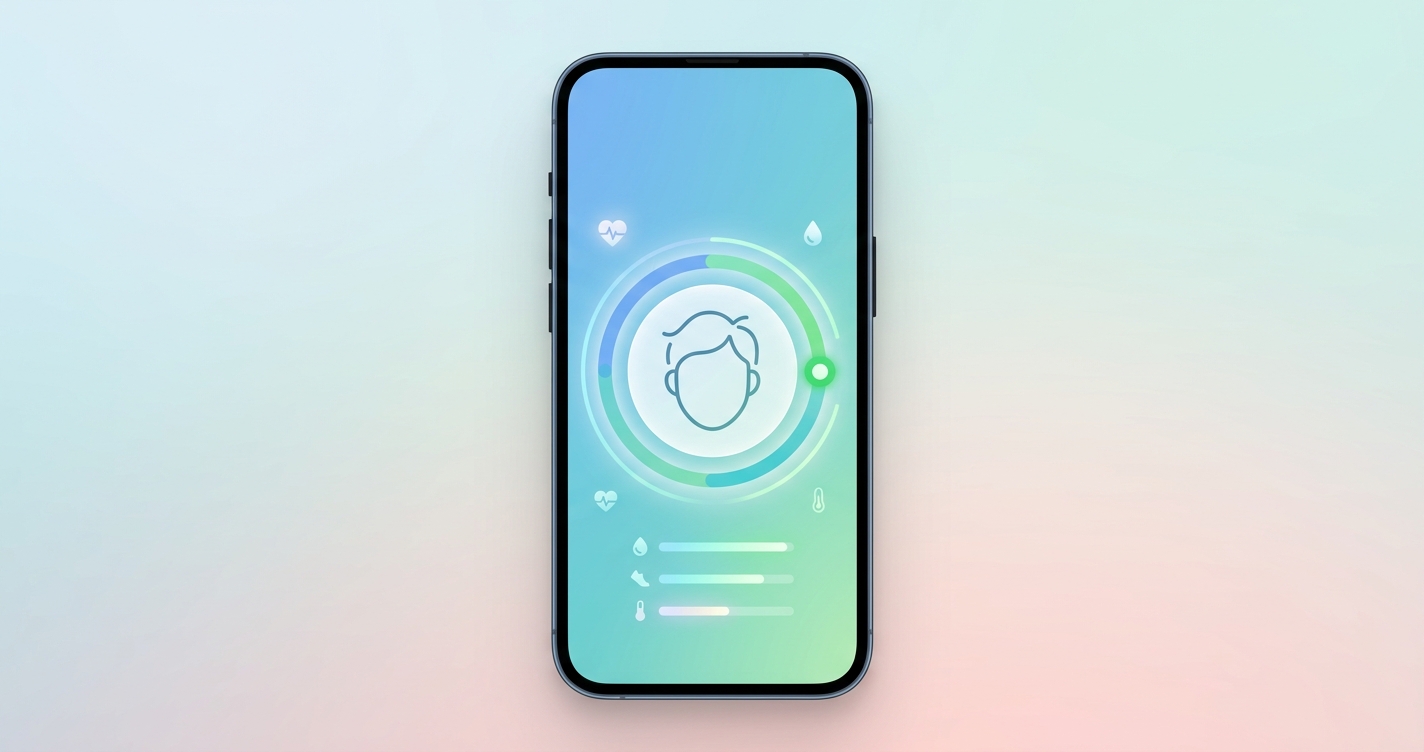
Most procurement conversations about contactless vitals happen in spreadsheets, but the part that decides whether a feature succeeds happens on a patient's phone, in the forty-five seconds between tapping "start" and seeing a number. Telehealth white label vitals are usually evaluated by product managers on accuracy and integration depth, yet the patient never sees an API. They see a screen with your logo, a camera preview, a progress ring, and a result. That surface is where adoption is won or lost, and it deserves the same rigor as the underlying measurement engine.
Roughly 54% of Americans reported using telehealth in the prior year and 89% of telehealth users said they were satisfied with their most recent virtual visit, according to a 2024 survey summarized by SecureVideo. Satisfaction at that scale is fragile, and it is shaped far more by interface friction than by backend architecture.
What telehealth white label vitals actually look like to a patient
When a telehealth platform adds camera-based vitals using remote photoplethysmography (rPPG), the patient experience is a short, guided sequence rather than a single moment. rPPG works by detecting tiny color changes in facial skin caused by blood flow, which a camera can read without contact, as described in the 2023 review of rPPG for healthcare applications published in the MDPI journal Electronics. The technology is invisible to the user. What is visible is the choreography around it.
A well-built telehealth white label vitals flow typically moves through five patient-facing stages:
- Consent and context: a short explanation of what is being measured and why, in the platform's own voice
- Positioning: a live camera preview with a face outline and lighting guidance
- Capture: a progress indicator that runs for roughly 30 to 60 seconds while the patient holds still
- Result: heart rate, respiratory rate, and other readings presented with plain-language framing
- Next step: routing into the visit, the care plan, or a clinician review queue
The branding question sits on top of every one of these stages. A "branded telehealth vitals experience" means the patient never encounters a logo, color, font, or tone that is not yours. The measurement is licensed; the experience is owned. That distinction is the core of what a white-label model sells, and it is also where many integrations quietly fail, because a vendor SDK ships with default screens that leak a third-party identity at exactly the moment a patient is deciding whether to trust the reading.
Branded versus generic: how the white label patient vitals screen changes perception
The same rPPG engine can produce two very different patient experiences depending on how the front end is handled. The table below compares a generic embedded widget with a fully customized white label patient vitals screen across the dimensions patients actually notice.
| Experience dimension | Generic embedded widget | Fully branded white-label screen |
|---|---|---|
| Logo and color on capture screen | Vendor or neutral default | Platform brand throughout |
| Instructional copy tone | Technical, one-size-fits-all | Matched to platform voice and reading level |
| Result presentation | Raw numbers | Numbers with platform-defined context and ranges |
| Error and retry messaging | Generic failure text | Branded, reassuring guidance |
| Transition into visit flow | Hard handoff or redirect | Seamless, in-app continuation |
| Patient perception of ownership | Bolt-on tool | Native platform capability |
The middle rows matter more than they appear. Result presentation and error messaging are where patient anxiety concentrates. A reading shown as a bare "112 bpm" with no context invites alarm; the same number framed within the platform's own guidance feels like care. Likewise, a failed capture is inevitable some fraction of the time, and the difference between a cold error and a reassuring "let us try that again with a little more light" is the difference between a completed measurement and an abandoned session.
Industry applications of telehealth vitals integration
Telehealth vitals integration is not a single use case. The patient-facing screen needs to flex depending on where in the journey it appears.
Pre-visit intake
Clinics increasingly ask patients to capture vitals before a video appointment so the clinician opens the call with data already in hand. Here the screen optimizes for speed and clarity, because the patient is in a waiting-room mindset and motivated to finish. Completion rate is the metric that matters, and it is highly sensitive to how many taps and how much reading stand between the patient and "done."
Remote monitoring and chronic care
For ongoing programs, the same patient takes a measurement repeatedly over weeks. The branded experience now has to reward consistency rather than just complete a task. Trend framing, gentle reminders, and a sense of progress keep adherence from decaying. The 2024 scoping review of post-pandemic telehealth perception indexed in PubMed found that patient concerns cluster around communication and the absence of physical examination, which is precisely the gap that a recurring, branded vitals capture can help close.
Triage and on-demand visits
When a patient initiates an unscheduled visit, vitals captured at the front of the flow help route urgency. The screen here must be forgiving and fast, because the patient may be unwell, distracted, or using a low-end device in poor lighting.
Across all three, the constant is that the patient should experience one coherent product. Telehealth vitals integration done well removes any seam between "the app I trust" and "the measurement I am being asked to take."
Current research and evidence
The evidence base splits into two streams that rarely meet. On the technical side, reviews such as the 2023 rPPG overview in MDPI Electronics and the broader rPPG-for-healthcare literature catalogued by the U.S. National Library of Medicine document steady improvement in camera-based heart rate and respiratory rate estimation, while noting that lighting, motion, and skin-tone variation remain active engineering challenges. On the experience side, telehealth satisfaction research consistently points to convenience and interface quality as the strongest drivers of repeat use.
What is still thin is published work that connects the two directly, measuring how the design of a white label patient vitals screen affects completion and trust for camera-based readings specifically. The market data frames the stakes: the global telehealth market was valued at roughly $128.5 billion in 2024 with projected compound annual growth above 24%, according to figures compiled across 2024 and 2025 industry analyses. As contactless vitals move from novelty to expectation, the design of the patient-facing layer becomes a competitive variable rather than a cosmetic one.
A practical takeaway for product teams: treat the vitals screen as a measurable funnel. Capture start rate, completion rate, retry rate, and drop-off by device class are the metrics that reveal whether a branded experience is actually working, independent of how accurate the engine is in a lab.
The Future of telehealth white label vitals
Three shifts are likely to define the next phase. First, personalization of the patient-facing screen will deepen, with platforms tuning copy, reading levels, and result framing to specific populations rather than shipping one generic flow. Second, the measurement will increasingly fade into the background of normal interactions, captured during an existing video moment rather than as a separate task. Third, the boundary between "wellness reading" and clinically actionable data will get sharper, pushing platforms to design screens that communicate the right level of confidence and the right disclaimers without undermining trust.
The common thread is that the engine becomes a commodity and the experience becomes the differentiator. The companies that win will be the ones that treat the white-label vitals screen as a first-class product surface, instrumented, tested, and owned end to end under their own brand.
Frequently asked questions
What does a patient actually see during a white-label vitals capture?
A patient sees a branded sequence: a short consent or context screen, a live camera preview with positioning and lighting guidance, a progress indicator during the 30-to-60-second capture, and then results presented in the platform's own voice. They do not see the underlying engine or any vendor identity if the integration is fully white-labeled.
How does branding the vitals screen affect patient behavior?
Branding reduces the perception that the feature is a bolt-on tool and increases the sense that it is a native platform capability. The most behaviorally important moments are result framing and error messaging, where reassuring, on-brand copy improves completion and reduces anxiety compared with generic numbers or cold failure text.
Can the patient vitals screen match our app's exact look and feel?
Yes. In a true white-label model the measurement engine is licensed while the front end, including logo, colors, fonts, instructional copy, result framing, and error handling, is customized to match the platform. The patient should never encounter a third-party identity anywhere in the flow.
What metrics should a product manager track for the vitals experience?
Track capture start rate, completion rate, retry rate, and drop-off segmented by device class and lighting conditions. These reveal whether the patient-facing design is working independent of raw engine accuracy, and they surface where copy, positioning guidance, or error handling need refinement.
Circadify is building toward exactly this layer of the problem, giving telehealth teams a contactless vitals engine wrapped in a fully customizable patient-facing experience rather than a locked default widget. Product managers who want to see how the white label patient vitals screen can be tailored to their own brand and flow can request a UX customization demo at circadify.com/custom-builds.