
Can I trust my health app to watch over my heart while I sleep?
A research view of the sleep heart monitor app market: passive nighttime monitoring without wearables, accuracy evidence, and what platform teams should weigh.
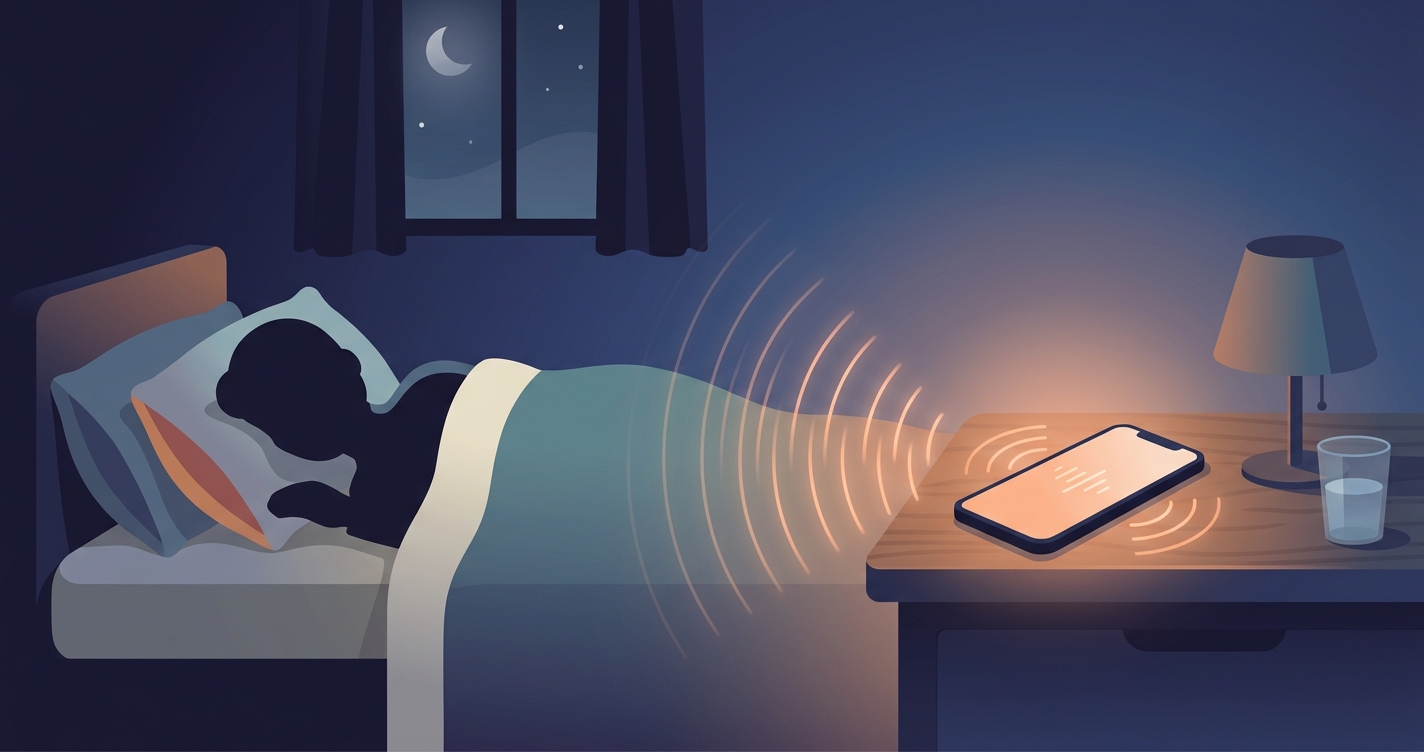
The most valuable health data a consumer generates is also the data they are least equipped to capture. People sleep through roughly a third of their lives, and that window holds resting heart rate, heart rate variability, breathing patterns, and the cardiac signals that often signal problems before daytime symptoms appear. The catch is friction: a sleeping person cannot tap a button, charge a device, or remember to wear anything. That gap is why the sleep heart monitor app has moved from novelty to a serious product category, and why telehealth platform teams and digital health founders are now asking whether a phone or bedside camera can responsibly watch over a heart through the night.
The global sleep tech devices market is estimated between USD 29.3 billion and USD 33.96 billion in 2025, with the non-wearable segment alone valued near USD 1.8 billion and growing at roughly 11.9 percent annually through 2035, according to aggregated 2025 industry market analyses.
What a sleep heart monitor app actually does
A sleep heart monitor app is software that estimates cardiac and respiratory signals during sleep without a strapped-on sensor. The dominant contactless approach is remote photoplethysmography, or rPPG, which reads tiny color changes in skin caused by blood flow using an ordinary camera. During the day this works from a face-up selfie camera. At night the engineering problem is harder, because the room is dark, the subject moves, and the face may be turned into a pillow.
Researchers have been narrowing that gap. A 2024 study published in JMIR mHealth and uHealth evaluated contactless monitoring of heart rate, breathing rate, and breathing disturbance during sleep in older adults, reporting reliable agreement against reference measures for nighttime cardio-respiratory signals. Google Research has published work on passive heart health monitoring through a smartphone camera, and a 2024 arXiv preprint described privacy-protected cardio-respiratory monitoring using deliberately defocused cameras during sleep, where blurred frames make faces hard to identify while still preserving the pulsatile signal. The direction of travel is clear: continuous, unobtrusive, and increasingly private.
For a product team, the important point is that "watching the heart while you sleep" is not one feature. It is a stack of distinct measurements with different difficulty levels and different evidence behind each.
How the monitoring methods compare
Buyers evaluating a sleep heart monitor app are really choosing between sensing modalities, each with trade-offs in cost, comfort, and the kind of data they yield. The table below frames the practical differences from a platform integration standpoint.
| Method | Hardware required | User friction at night | Signals captured | Integration cost for a platform |
|---|---|---|---|---|
| Camera rPPG (phone or bedside) | Existing camera | Very low, no contact | Heart rate, breathing rate, HRV trends | Low to moderate, software only |
| Wrist wearable | Dedicated band or watch | Moderate, must wear and charge | Heart rate, HRV, SpO2, sleep stages | Moderate, device logistics |
| Chest strap ECG | Dedicated strap | High, uncomfortable to sleep in | High-fidelity ECG, HRV | High, device and pairing |
| Under-mattress sensor | Bed-mounted hardware | Low, passive | Heart rate, breathing, movement | High, hardware supply chain |
| Radar or contactless bedside unit | Dedicated bedside device | Low, passive | Heart rate, breathing, presence | High, hardware and certification |
A few patterns stand out for teams weighing where to invest:
- The lowest-friction options are the passive ones, but among passive methods only camera rPPG avoids a hardware supply chain entirely.
- Wearables capture more signal types but reintroduce the exact friction, charging and wearing, that drives consumers toward passive monitoring.
- Hardware-based contactless options deliver strong overnight data yet carry inventory, fulfillment, and often regulatory burden that software-only approaches sidestep.
Industry applications for passive nighttime monitoring
Telehealth platforms
For telehealth product managers, overnight cardiac data closes a visibility gap. A virtual visit captures a single daytime snapshot, while sleep monitoring adds days of resting baseline. A camera-based sleep heart monitor app lets a platform offer continuity of data between appointments without shipping, tracking, and supporting physical devices, which is frequently the single largest hidden cost in remote monitoring programs.
Digital health and wellness startups
Founders building habit, recovery, or stress products want the resting heart rate and HRV signals that are most stable during sleep. Licensing a contactless engine lets a small team add credible nighttime cardiac features without staffing a computer-vision and signal-processing group, which compresses both timeline and burn.
Chronic care and aging-in-place
Passive overnight monitoring is especially relevant for older adults, the population studied in the 2024 JMIR aging research. The same group most likely to benefit from cardiac trend detection is the least likely to consistently wear and charge a device, which makes contactless or ambient sensing a better behavioral fit.
Current research and evidence
The evidence base for nighttime contactless monitoring is maturing but still uneven, and product teams should read it carefully rather than assume parity across signals.
- Heart rate is the most validated contactless signal. The 2024 JMIR mHealth and uHealth aging study reported reliable nighttime heart rate and breathing rate agreement against reference measures, and multiple 2024 reviews in MDPI journals describe deep-learning rPPG pipelines improving robustness to motion and low light.
- Heart rate variability is harder. A 2024 systematic review of wearable HRV accuracy by Hinde and colleagues, published in Sensors and indexed in PubMed, found that agreement with ECG varies significantly by device, by HRV metric, and by population, with the best results during stable, motionless sleep. That caveat applies to any modality, contactless included.
- Privacy engineering is becoming a research topic in its own right. The 2024 arXiv work on defocused-camera monitoring shows the field is treating bedroom privacy as a design constraint, not an afterthought, which matters for consumer trust and for procurement reviews.
The honest reading is that resting heart rate and breathing rate during sleep are increasingly defensible with contactless methods, while fine-grained HRV and sleep-stage classification remain areas where claims should be conservative and well qualified. A sleep heart monitor app should communicate trends and wellness context rather than diagnostic certainty.
The future of the sleep heart monitor app
Three shifts are likely to define the next phase. First, ambient capture will spread beyond the phone to smart displays, bedside cameras, and other always-on optics, turning the bedroom into a passive sensing environment rather than something the user actively operates. Second, multimodal fusion will combine camera signals with microphone-based breathing detection and motion data to raise confidence on nights when any single signal is weak. Third, the regulatory and privacy framing will sharpen, with on-device processing and privacy-preserving capture, like the defocused approach, becoming default expectations rather than differentiators.
For platform teams, the strategic question is no longer whether contactless overnight monitoring is feasible. It is whether to build the computer-vision and signal-processing engine internally or license a proven one and focus engineering on the experience, the care workflows, and the data layer that actually differentiate a product.
Frequently asked questions
Can a phone camera really measure heart rate while someone sleeps in the dark? Camera rPPG depends on light, so total darkness is a genuine constraint. Practical implementations use ambient light, screen glow, or near-infrared capture, and 2024 research on defocused and AI-enhanced cameras shows nighttime heart rate and breathing rate can be estimated reliably under realistic low-light conditions. Fine HRV in pitch dark with heavy movement remains the hardest case.
Is contactless sleep monitoring accurate enough to trust? For resting heart rate and breathing rate, peer-reviewed 2024 work reports reliable agreement against reference measures. Heart rate variability is more variable across all methods, including wearables. The responsible framing is wellness trend monitoring, not clinical diagnosis, with clear language about what the numbers do and do not mean.
Why would a platform choose camera-based monitoring over a wearable? The decisive factor is usually operational. Wearables require inventory, shipping, charging, and support, while a software engine runs on hardware users already own. For teams scaling to large populations, removing the device supply chain often outweighs the extra signal types a wearable can capture.
How long does it take to add nighttime cardiac monitoring to an existing app? That depends on whether you build or license. A licensed contactless engine integrated through an SDK or API can add camera-based vitals in weeks rather than the many months a from-scratch computer-vision build typically requires.
Circadify is building in exactly this space, developing a fully white-labeled contactless vitals engine so that telehealth platforms, digital health startups, and health systems can offer passive, camera-based monitoring under their own brand instead of assembling the computer-vision stack themselves. Teams evaluating how a sleep heart monitor app could fit their roadmap can start a partnership conversation at circadify.com/custom-builds.