
What if my health app could warn me about problems before I feel sick?
How predictive health app warnings work, what the research shows about early detection, and why white-label rPPG gives digital health companies the infrastructure.
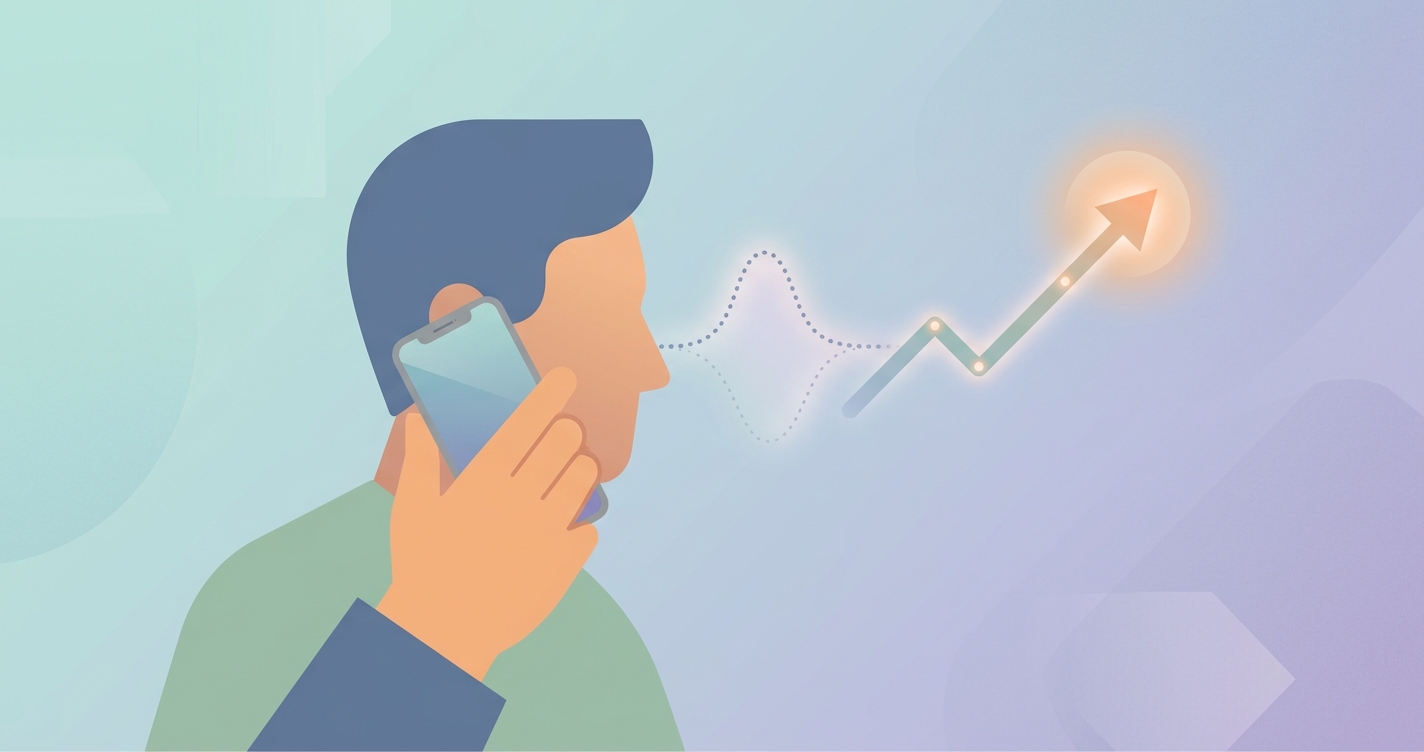
The most valuable feature a health app can offer is not a reading. It is a heads-up. Users no longer want a number on a screen after they already feel unwell; they want the app to notice the drift before the cough, before the fatigue, before the bad day that turns into a worse week. This is the promise behind predictive health app warnings, and it has moved from speculative pitch deck material to a documented research area with named investigators and measurable lead times. For digital health companies, the strategic question is no longer whether early detection works, but who builds the measurement layer underneath it.
In a Stanford study of wearable data, physiological signals detected COVID-19 infection a median of four days before symptom onset in roughly 80 percent of cases, according to Michael Snyder, director of the Stanford Healthcare Innovation Lab (2020).
What predictive health app warnings actually require
A predictive health app warning is not magic, and it is not a single sensor reading. It is the product of three layers working together: continuous or repeated physiological capture, a personalized baseline for each user, and an algorithm that flags meaningful deviation from that baseline. The hard part for most product teams is the first layer. You cannot predict a problem from data you never collect, and you cannot collect rich physiological data if every measurement requires a finger clip, a chest strap, or a shipped device.
This is where contactless measurement changes the economics. Remote photoplethysmography, or rPPG, extracts pulse-driven color changes from skin using an ordinary smartphone or laptop camera. It turns the device the user already owns into a vitals sensor for heart rate, heart rate variability, respiratory rate, and related signals. The friction of a 30-second face scan is far lower than strapping on hardware, which means more frequent measurements, which means a denser baseline, which means earlier and more confident warnings.
The research backbone for this is already substantial. Michael Snyder and Xiao Li at Stanford showed as early as 2017 that deviations in resting heart rate and skin temperature could flag infection, including Lyme disease and respiratory viruses. The Mount Sinai Warrior Watch Study found that wrist-worn sensor data could signal COVID-19 onset up to seven days before diagnosis. The COVI-GAPP cohort study used a sensor bracelet to detect presymptomatic physiological change tied to infection. The common thread across all of this work is not the brand of device. It is the principle: small, early shifts in vitals carry warning signal, if you are capturing them often enough to see the trend.
Reactive versus predictive monitoring
Most health apps on the market today are reactive. They tell the user what is happening right now. The shift toward early detection means designing for what is about to happen. The difference shows up across the whole product.
| Dimension | Reactive monitoring | Predictive monitoring |
|---|---|---|
| Trigger | User initiates a check when worried | App flags drift from baseline automatically |
| Data cadence | Occasional, symptom-driven | Frequent, routine, low-friction |
| Core asset | A single accurate reading | A personalized longitudinal baseline |
| User value | Confirmation | Lead time and early action |
| Measurement need | One device, one moment | Repeated capture across days and weeks |
| Best-fit capture method | Cuffs, clips, manual entry | Contactless camera scans, passive wearables |
| Business outcome | Engagement spike, then drop-off | Sustained engagement and retention |
The table makes the product logic clear. Predictive features depend on cadence, and cadence depends on friction. A platform that asks users to find a peripheral device will collect sparse data and produce weak baselines. A platform that lets users complete a camera scan in under a minute, anywhere, collects the dense data that early-warning algorithms need.
What this means for a digital health roadmap:
- Frequency beats one-off accuracy when the goal is trend detection.
- A personalized baseline is more valuable than a population average, because warnings fire on individual deviation.
- Low-friction capture is the single biggest driver of data density.
- Early-warning features are sticky, because users return to see whether anything has changed.
Industry applications of early detection features
Telehealth and virtual care
Telehealth platforms have a structural gap between visits. Predictive health app warnings fill that gap by turning the time between appointments into a monitored window. A patient who scans a few times a week builds a record that a clinician can review, and a deviation can prompt an earlier visit instead of a delayed one. For platform product managers, this converts a transactional consult product into a continuous relationship.
Chronic condition management
Conditions like heart failure, COPD, and hypertension are managed largely through trend awareness. Research on digital physiological biomarkers has shown that within-person changes in heart rate and HRV can predict symptom exacerbations in complex chronic illness. An app that detects the early drift can prompt a medication review or a check-in before an emergency department visit becomes necessary.
Employer wellness and population health
Branded screening portals that already collect vitals can layer early-warning logic on top of existing scans. When the measurement is contactless and embedded in a wellness app, participation is high enough to produce useful population baselines, and individuals get personalized nudges rather than generic advice.
Post-acute and remote patient monitoring
For RPM programs, the warning is the product. Catching deterioration days earlier reduces readmissions and supports value-based contracts. Contactless capture removes the device logistics that make traditional RPM expensive to scale.
Current research and evidence
The evidence base for early physiological warning has grown steadily and is no longer tied to a single pathogen or a single device class.
- The Stanford Healthcare Innovation Lab, led by Michael Snyder, reported that wearables collecting more than 250,000 measurements per day could detect infection a median of four days before symptoms in about 80 percent of cases (2020).
- The Mount Sinai Warrior Watch Study found wrist-sensor data could indicate COVID-19 up to seven days ahead of diagnosis.
- The COVI-GAPP prospective cohort study demonstrated presymptomatic detection of physiological changes using a sensor bracelet.
- A two-year study launched at the University of Texas at Arlington in August 2025 is using commercially available wearables to predict cardiovascular disease risk, extending the early-warning concept beyond acute infection into chronic risk.
Two cautions belong in any honest assessment. First, most of this research relies on continuous wearable streams, while camera-based capture is intermittent; the trade-off is friction versus density, and the right design uses frequent voluntary scans to approximate a useful baseline. Second, the signal is probabilistic. These systems surface elevated risk and prompt attention, not diagnoses. Responsible products frame warnings as a reason to look closer, not a verdict.
The future of predictive health app warnings
The direction of travel is toward warnings that are personalized, multi-signal, and quiet until they matter. Several shifts are already visible. Baselines will become richer as capture frequency rises, which favors any modality that lowers friction. Models will combine vitals with context such as sleep and activity to reduce false alarms. And the measurement layer will increasingly be sourced rather than built, because the differentiation for most digital health companies lies in the experience and the care pathway, not in re-solving signal processing from scratch.
For founders and product leaders, the build-versus-source decision is the practical crux. Constructing a reliable contactless vitals engine, validating it across skin tones and lighting conditions, and maintaining it is a multi-year effort. Licensing a white-label engine lets a team ship early-detection features under its own brand while keeping the roadmap focused on the warning logic and clinical workflow that users actually feel.
Frequently asked questions
Can a phone camera really capture enough data for early warnings?
A camera using rPPG can measure heart rate, heart rate variability, and respiratory rate from a short face scan. The key to prediction is not one scan but many over time, building a personalized baseline so the system can flag deviation. Frequent, low-friction scans produce the data density that early-warning logic depends on.
Is a predictive warning the same as a medical diagnosis?
No. Early-warning signals are probabilistic indicators that something has shifted from a user's normal pattern. They are best framed as a prompt to pay attention, rest, or seek care, not as a clinical diagnosis. Responsible products keep that distinction clear in the user experience.
How far in advance can physiological signals warn of a problem?
It varies by condition and individual. Published infection studies have shown lead times ranging from several days to about a week before symptom onset. Chronic-condition research focuses on detecting within-person trend changes that precede an exacerbation rather than a fixed number of days.
Should we build the measurement engine or license it?
Most digital health teams find that the durable differentiation is in the care pathway, branding, and warning experience, not in the underlying signal processing. Licensing a white-label contactless vitals engine lets a team deliver early-detection features quickly under its own brand while focusing engineering effort on the parts users see.
Circadify is building toward this exact problem by providing a fully white-labeled contactless vitals engine that digital health companies can deploy as their own. If your roadmap includes predictive health app warnings and early-detection features, the measurement layer can be sourced rather than built from zero. Explore a partnership and custom build at circadify.com/custom-builds.