
What Is Multi-Tenant Architecture? Health Monitoring Platforms Explained
A research-backed explanation of multi-tenant architecture in health monitoring platforms, including scalability, isolation, compliance, and buyer implications in 2026.
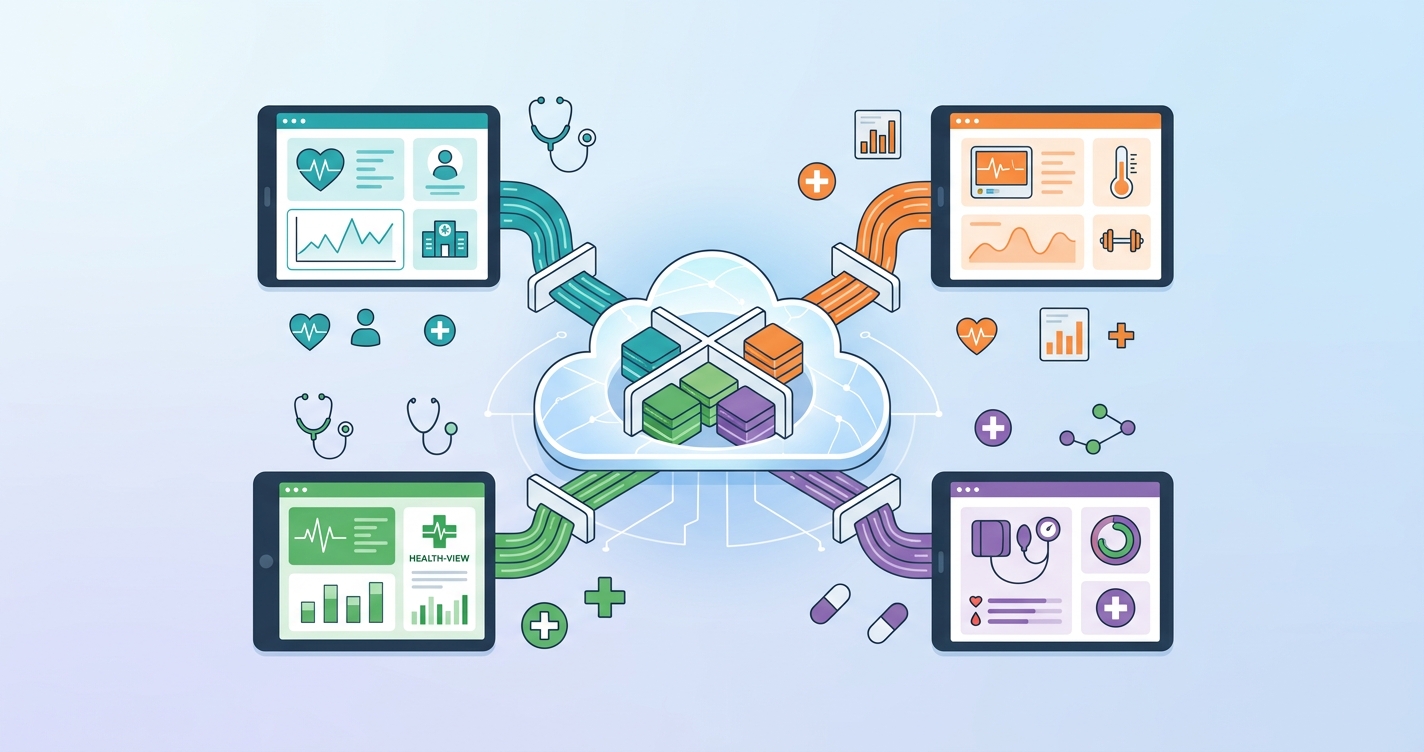
For many buyers, the phrase multi tenant architecture health monitoring platform sounds like back-end jargon that only matters to engineers. It does matter to engineers, but it also affects launch speed, operating cost, data isolation, configuration flexibility, and how easily a platform can support many customers without turning each deployment into a separate software product. In 2026, that question sits near the center of white-label digital health platform design.
"Cloud computing is a model for enabling ubiquitous, convenient, on-demand network access to a shared pool of configurable computing resources." — Peter Mell and Tim Grance, National Institute of Standards and Technology, SP 800-145 (2011)
Multi tenant architecture health monitoring platform: what it actually means
A multi-tenant architecture is a software design in which multiple customers use the same core application and infrastructure while their data, permissions, and configuration stay logically separated. In plain terms, one platform serves many organizations without forcing the vendor to run a totally separate stack for every customer.
That matters in health monitoring because the platform may need to support:
- different provider groups or digital health brands
- different care pathways and alerting rules
- different administrator roles and access permissions
- different reporting views for customers, operators, and clinical teams
- different integration points with EHR, CRM, or care management systems
If that sounds simple on paper, it usually is not. Health monitoring platforms have to juggle patient data, workflow design, uptime expectations, and compliance requirements at the same time. A single-tenant setup can reduce some isolation concerns, but it also raises cost and slows deployment. Multi-tenant design tries to keep the efficiency of shared software while preserving the boundaries buyers expect.
| Architecture model | How it works | Main advantage | Main drawback | Best fit |
|---|---|---|---|---|
| Single tenant | Each customer has a separate application environment or stack | Strong customer-specific isolation and customization | Higher hosting, maintenance, and deployment cost | Large enterprises with unusual requirements |
| Multi tenant | Customers share the same core platform with logical separation of data and settings | Lower marginal cost and faster scaling across many accounts | Requires careful access control, governance, and configuration design | White-label platforms, RPM vendors, telehealth software |
| Hybrid | Shared core services with dedicated components for selected customers or workloads | Balances efficiency with premium isolation where needed | More operational complexity than either pure model | Platforms serving both mid-market and enterprise buyers |
I keep coming back to one practical point: buyers rarely purchase "multi-tenancy" as a feature. They buy the outcome. They want a branded platform that launches quickly, scales cleanly, and does not create fresh compliance headaches every time a new customer is added.
Why multi-tenancy keeps showing up in digital health
The pressure is mostly economic. Rock Health reported that U.S. digital health startups raised $14.2 billion in 2025, up 35% from 2024, while deal count fell and average deal size rose to $29.3 million. That is not a casual market. It is a market that increasingly rewards platforms that look like durable infrastructure.
A health monitoring vendor serving hospitals, payers, employers, or virtual care providers cannot afford to rebuild the same product for each account forever. A shared platform makes it easier to onboard customers with repeatable implementation patterns, centralized updates, and more consistent analytics.
That is one reason multi-tenant design has become common in white-label health platforms. The vendor can maintain one product roadmap while giving each customer its own branding, workflows, and administrative controls.
The architectural side of the market points in the same direction. In their 2025 systematic review in Frontiers in Digital Health, Ricardo Casanova, Francisco A. Villa-Garzon, and Juan W. Branch-Bedoya reviewed 89 health information system studies and found that service-based architectures were dominant, while FHIR-based contracts helped stabilize interfaces and reduce integration costs. That finding matters because multi-tenant health monitoring platforms usually depend on modular services and stable APIs. Without those, every new customer becomes a custom engineering project.
Where multi-tenant architecture helps health monitoring platforms
Faster launches
A shared application layer allows a vendor to provision a new customer by configuring an existing product rather than cloning an entirely new environment. For buyers, that often means shorter implementation cycles.
Lower marginal cost per account
Core infrastructure, deployment pipelines, monitoring, and product updates are shared. That can improve software economics, especially when the platform is supporting many smaller or mid-sized customers.
More consistent product updates
When one codebase powers many customer environments, security updates and feature releases can move faster. That consistency matters in health monitoring, where workflow changes, policy updates, and device support can shift quickly.
Better operational analytics
Shared architecture often makes it easier to measure usage, uptime, feature adoption, and implementation patterns across the platform. Those signals can shape product decisions more quickly than fragmented single-customer deployments.
The part buyers should ask harder questions about
Multi-tenancy works only if isolation is designed seriously. Logical separation is not the same thing as vague promises.
The U.S. Department of Health and Human Services notes in its HIPAA cloud guidance that cloud service providers handling ePHI are business associates under HIPAA, even if they store only encrypted data and do not hold the encryption key. That reminder sounds legalistic, but it has a very practical implication: shared infrastructure does not reduce accountability. It raises the bar for access control, audit logging, vendor oversight, and segmentation.
Buyers evaluating a health monitoring platform should press on a few areas:
- how tenant data is partitioned in storage and application logic
- how role-based access control is enforced across customer boundaries
- how audit trails are captured for administrative and clinical actions
- how custom workflows are configured without changing core code for one client
- how integrations are isolated when one customer needs a distinct EHR or CRM setup
- how backup, disaster recovery, and incident response work in a shared environment
Here is where the architecture conversation gets real. If a platform says it is multi-tenant, but every enterprise deal requires branch-level code changes or semi-manual database handling, it is probably not a mature multi-tenant system. It is a platform still pretending to be one.
Current research and evidence
The broader evidence around digital monitoring supports the idea that scalable architecture matters because health monitoring programs only make economic sense when they can be deployed repeatedly.
In npj Digital Medicine (2025), Stephanie P. Gavan, Katherine Payne, William G. Dixon, S. F. N. van der Veer, A. C. T. Tam, and Nick Bansback reviewed cost-effectiveness analyses of mobile device-based active remote monitoring for long-term conditions. They identified seven analyses across six conditions and found that six of the seven interventions were cost-effective, though with decision uncertainty. That is not a direct endorsement of multi-tenancy, but it does show why repeatable deployment models matter: if remote monitoring is going to scale economically, the platform underneath it cannot be rebuilt from scratch for every customer.
The reimbursement backdrop matters too. Evan Huang-Ku, Panchanok Muenkaew, Kinanti Khansa Chavarina, and colleagues wrote in Journal of Medical Internet Research (2025) that workable telemedicine reimbursement is a critical enabling factor for scale, sustainability, and equity. In practice, reimbursement variability pushes vendors toward configurable platform models. Different customers may need different workflows, billing relationships, and service designs while still running on the same core software.
NIST's cloud definition remains useful here because Peter Mell and Tim Grance framed cloud around shared, configurable resources, rapid provisioning, and measured service. That is basically the infrastructure logic behind modern multi-tenant SaaS. In digital health, the challenge is translating that cloud efficiency into a system that still respects healthcare's need for separation, traceability, and reliability.
| Research source | Relevant finding | Why it matters for multi-tenancy |
|---|---|---|
| Mell and Grance, NIST (2011) | Cloud computing depends on shared configurable resources and rapid provisioning | Explains the infrastructure logic behind shared-platform design |
| Casanova, Villa-Garzon, Branch-Bedoya, Frontiers in Digital Health (2025) | Service-based architectures dominated 89 HIS studies; FHIR-based contracts reduced integration costs | Supports modular, reusable platform design for many customers |
| Gavan et al., npj Digital Medicine (2025) | Six of seven cost-effectiveness analyses found mobile remote monitoring cost-effective, with uncertainty | Scalable architecture matters when programs need repeatable economics |
| Huang-Ku et al., JMIR (2025) | Telemedicine reimbursement models vary across fee-for-service, capitation, bundled, and value-based methods | Shared platforms need customer-specific workflow configuration, not separate products each time |
Industry applications
White-label digital health platforms
This is the clearest fit. A vendor can support multiple brands on one core platform while changing logos, care pathways, analytics views, and enrollment flows at the tenant level.
Telehealth and virtual care operators
Telehealth organizations often want the same underlying vitals workflow across several customer groups, employer programs, or provider networks. Multi-tenancy can let them manage those deployments centrally instead of maintaining fragmented products.
RPM and chronic care vendors
Remote monitoring companies need repeatable enrollment, patient management, alert routing, and reporting. A tenant-based design can separate customer organizations while preserving one operating backbone.
Enterprise health platforms
Larger platforms sometimes start with multi-tenancy and then carve out dedicated components for high-volume customers. That is where hybrid models show up: shared application services, but dedicated data stores, network controls, or regional hosting for selected accounts.
The future of multi-tenant health monitoring platforms
The next step is probably not "everything shared" or "everything dedicated." It is more selective architecture.
Casanova and colleagues argue that microservices dominate current health information system design, but that resilient ecosystems need architectural diversity. That feels right. In practice, mature health monitoring vendors are moving toward a layered model:
- shared core services for identity, orchestration, analytics, and deployment
- tenant-level configuration for branding, workflows, and reporting
- dedicated options for customers with stricter compliance, residency, or integration needs
That hybrid direction makes sense because the buyer mix is widening. Some customers want speed and cost efficiency. Others want isolation, regional controls, or unusual contracting terms. A platform that cannot support both will eventually hit a ceiling.
Frequently asked questions
What is multi-tenant architecture in a health monitoring platform?
It is a software architecture where multiple customer organizations use the same core platform while their data, permissions, and configuration remain logically separated.
Is multi-tenant architecture secure enough for healthcare?
It can be, but only if the platform has strong tenant isolation, access controls, audit logging, encryption, and operational governance. Shared infrastructure does not remove HIPAA or security obligations.
Why do health monitoring vendors prefer multi-tenancy?
Because it usually lowers operating cost, speeds up onboarding, simplifies updates, and supports repeatable deployment across many customers without maintaining a separate product stack for each one.
When is single-tenant architecture a better fit?
Single-tenant designs are often better for customers with unusual security demands, highly customized workflows, or procurement requirements that justify the added cost and complexity.
If your team is weighing how to launch a branded monitoring platform without turning every customer deployment into a separate build, solutions like Circadify Custom Builds are built for that middle ground: shared infrastructure where it helps, customer-specific configuration where it counts.
Related reading on this site: What Is White-Label Health Monitoring? Platform Options Explained, White-Label vs Build From Scratch: Cost and Timeline Compared, and How Digital Health Startups Go to Market Faster With White-Label.