
How to Launch a Branded Health Monitoring App in 60 Days
A timeline-driven guide for founders who want to launch a branded health monitoring app fast using white-label rPPG tech, with a realistic 60-day plan.
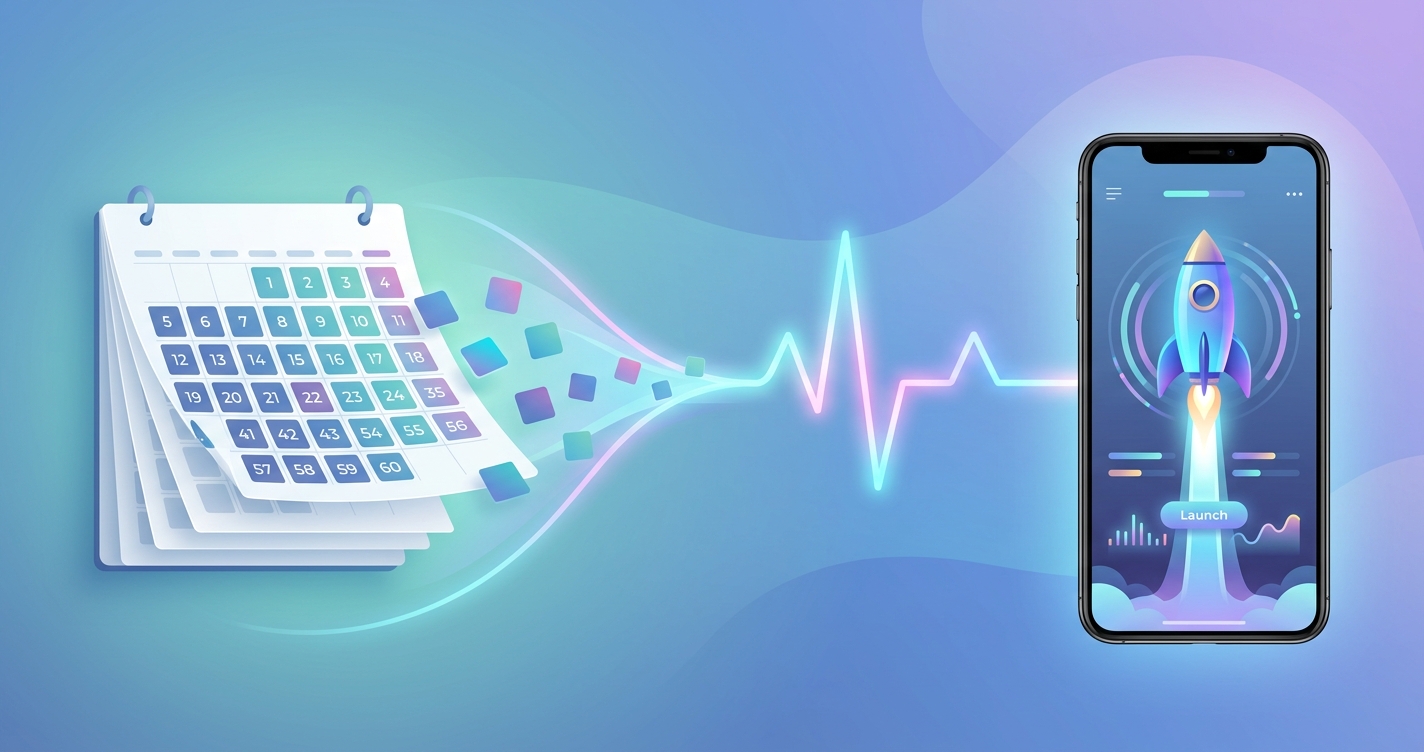
Most founders who want to launch a branded health monitoring app discover the same hard truth within their first month of planning: the engineering work is not the bottleneck, the calendar is. A camera-based vitals product that takes a year to build often misses the funding window, the partner conversation, or the pilot slot it was meant to win. The teams shipping fastest in 2025 are not the ones with the biggest engineering budgets. They are the ones who decided early to buy the measurement engine and spend their own time on brand, distribution, and clinical positioning.
White-label remote monitoring platforms can be deployed in roughly 2 to 8 weeks, compared with 12 months or more for fully custom development, according to vendor and integration analyses summarized by Tellescope (2025). The same period saw over 71 million Americans, about 26% of the population, using some form of remote patient monitoring service (IntuitionLabs, 2025).
Why you can launch a branded health monitoring app in 60 days
The reason a 60-day timeline is realistic now and was not a few years ago comes down to where the hard problem lives. Contactless vitals using remote photoplethysmography (rPPG) require signal processing, model training, lighting and motion handling, and validation work that takes specialized teams years to mature. When you license a white-label health platform, that work is already done. What remains is integration, branding, compliance review, and a go-to-market motion, all of which are well-understood project types with predictable durations.
Compare that to the alternative. Independent cost surveys in 2025 put a feature-rich digital health build at $150,000 to $450,000 and 4 to 18 months of development, with comprehensive first-year operational costs reaching $400,000 to $800,000 (Specode, 2025; MindBowser, 2025). A 60-day launch is not about cutting corners on that scope. It is about not rebuilding the parts that already exist.
The phrase "launch branded health monitoring app" usually hides three different jobs that founders conflate:
- Building the measurement technology (license this)
- Wrapping it in your brand and user experience (your differentiator)
- Clearing compliance, distribution, and support (project management)
Once those are separated, the timeline stops being mysterious.
Build vs. white-label: what the timeline actually looks like
| Dimension | Custom In-House Build | White-Label rPPG Platform |
|---|---|---|
| Time to first working app | 4 to 18 months | 2 to 8 weeks |
| Typical first-year cost | $400K to $800K | Licensing plus integration |
| Engineering team needed | Signal, ML, mobile, backend | Mobile and integration only |
| Vitals model maturity | Built from scratch | Pre-trained and tuned |
| Brand control | Full | Full (white-labeled) |
| Main risk | Schedule and validation slip | Vendor fit and integration depth |
| Founder focus | Technology | Distribution and clinical value |
The table makes the tradeoff concrete. A white-label path moves your risk from "can we build accurate vitals at all" to "did we pick the right partner and integrate well," which is a far more manageable question for a small team.
A realistic 60-day launch plan
A fast health app launch works best when it is broken into two-week sprints with a single owner per workstream. The following sequence assumes you have selected a white-label vitals engine before day one, because vendor selection is the part that should not be rushed.
Days 1 to 14: Foundation and Branding
- Lock product scope to a single primary use case, such as pre-visit screening or wellness check-ins
- Define the brand layer: name, color system, onboarding copy, and the measurement screen experience
- Sign the platform agreement and provision SDK or API access
- Stand up your account, authentication, and data storage decisions
- Start the compliance conversation early, mapping HIPAA or regional obligations to the vendor's existing posture
Days 15 to 30: Integration
- Embed the rPPG capture flow into your app shell
- Wire results into your backend and user profile
- Configure vitals thresholds, alerts, and how readings are presented
- Build the consent and disclosure screens that match your regulatory intent
- Run internal capture testing across devices, skin tones, and lighting conditions
Days 31 to 45: Validation and Hardening
- Conduct a closed beta with real users in realistic settings
- Tune the user experience around capture failures and retries, which is where most consumer drop-off happens
- Confirm data handling, audit logging, and security review items
- Finalize support workflows and help content
Days 46 to 60: Launch
- Submit to app stores with adequate review buffer
- Prepare your distribution motion: pilot customer, employer program, or clinic rollout
- Set up analytics to track capture success rate, not just installs
- Ship, then monitor the first cohort closely
A quick branded vitals deployment is not a single weekend of heroics. It is a disciplined refusal to rebuild solved problems.
Industry Applications
Telehealth platforms adding vitals without hardware
Telehealth product teams face a logistics problem more than a technology one. Shipping and managing peripheral devices erodes margin and slows enrollment. A camera-based layer lets a platform add heart rate, respiration, and related signals to an existing visit flow without a hardware supply chain, which is why this white label health platform timeline matters so much to PMs evaluating roadmap bets.
Digital health startups racing to a pilot
For founders, speed is a financing variable. U.S. digital health funding stayed strong through 2025, and investors increasingly reward teams that show a working product and an early pilot over those still in development. Licensing the engine lets a startup spend its scarce months proving distribution rather than debugging signal processing.
Hospital and employer programs
Hospital IT and employer wellness teams typically need a branded patient or member experience that fits inside existing portals. A white-labeled vitals capability can be deployed under the institution's brand, satisfying procurement's need for control while avoiding a multi-year internal build.
Current research and evidence
The market context supports the urgency. The global remote patient monitoring market was valued at roughly $28.5 billion in 2025, with North America accounting for about 53.3% of global share (Cognitive Market Research, 2025). Adoption is broad rather than niche: IntuitionLabs (2025) reported more than 71 million Americans using some form of RPM, and CMS proposed 2025 updates intended to expand reimbursement and eligibility, which broadens the addressable use cases for branded monitoring products.
On the build-versus-buy economics, 2025 development surveys consistently place complex digital health applications in the multi-quarter, multi-hundred-thousand-dollar range, with compliance, security audits, and integrations adding another 15 to 25% to budgets (Specode, 2025). Against that baseline, the weeks-not-months timeline reported for white-label remote monitoring deployments (Tellescope, 2025) is the central reason a 60-day launch is achievable rather than aspirational.
The evidence does not suggest white-label is automatically the right call for every company. It suggests that for teams whose differentiation is brand, clinical workflow, or distribution rather than core sensing technology, the time and cost savings are substantial and well-documented.
The future of fast branded vitals deployment
Three shifts are likely to compress launch timelines further. First, white-label vendors are standardizing compliance documentation and integration tooling, which removes the slowest parts of the current 60-day plan. Second, as rPPG models mature across more devices and conditions, validation cycles shorten because the capture experience is more reliable out of the box. Third, distribution channels for branded monitoring, from employer benefits platforms to EHR-connected patient apps, are becoming more receptive, shortening the gap between launch and first real users.
The competitive implication is that owning the measurement technology will matter less, and owning the brand relationship and the workflow will matter more. Founders who internalize that now will spend their next 60 days on the things that actually compound.
Frequently asked questions
Is a 60-day launch realistic for a regulated health product?
It can be, provided you treat compliance as a parallel workstream from day one and license a platform whose regulatory posture you can build on. The timeline assumes a focused single-use-case scope. Expanding scope mid-project is the most common reason teams slip past 60 days.
What slows down a fast health app launch the most?
Vendor selection done late, scope creep, and app store review buffers. Selecting your white-label engine before the clock starts, freezing scope, and reserving two weeks for store review and beta tuning protect the timeline more than any engineering optimization.
Does white-label mean my app looks generic?
No. A properly white-labeled health platform exposes the measurement engine while leaving the brand, user experience, onboarding, and data presentation fully under your control. Users see your product, not the vendor's.
How much should I budget compared to building in-house?
In-house complex builds commonly run $150,000 to $450,000 in development plus significant first-year operating cost. A white-label path replaces most of that engineering spend with licensing and integration, shifting your budget toward distribution and clinical validation where it has more leverage.
Circadify is working in exactly this space, building fully white-labeled contactless vitals technology so health companies can put their own brand on a mature measurement engine instead of constructing one from scratch. Teams planning a fast launch can explore a partnership and fast-launch program at circadify.com/custom-builds.