
How Pharmacy Chains Add In-Store Health Checks Under Their Brand
Discover how retail pharmacies and clinics deploy software-based, white-label health screening tools to scale contactless vitals without hardware bottlenecks.
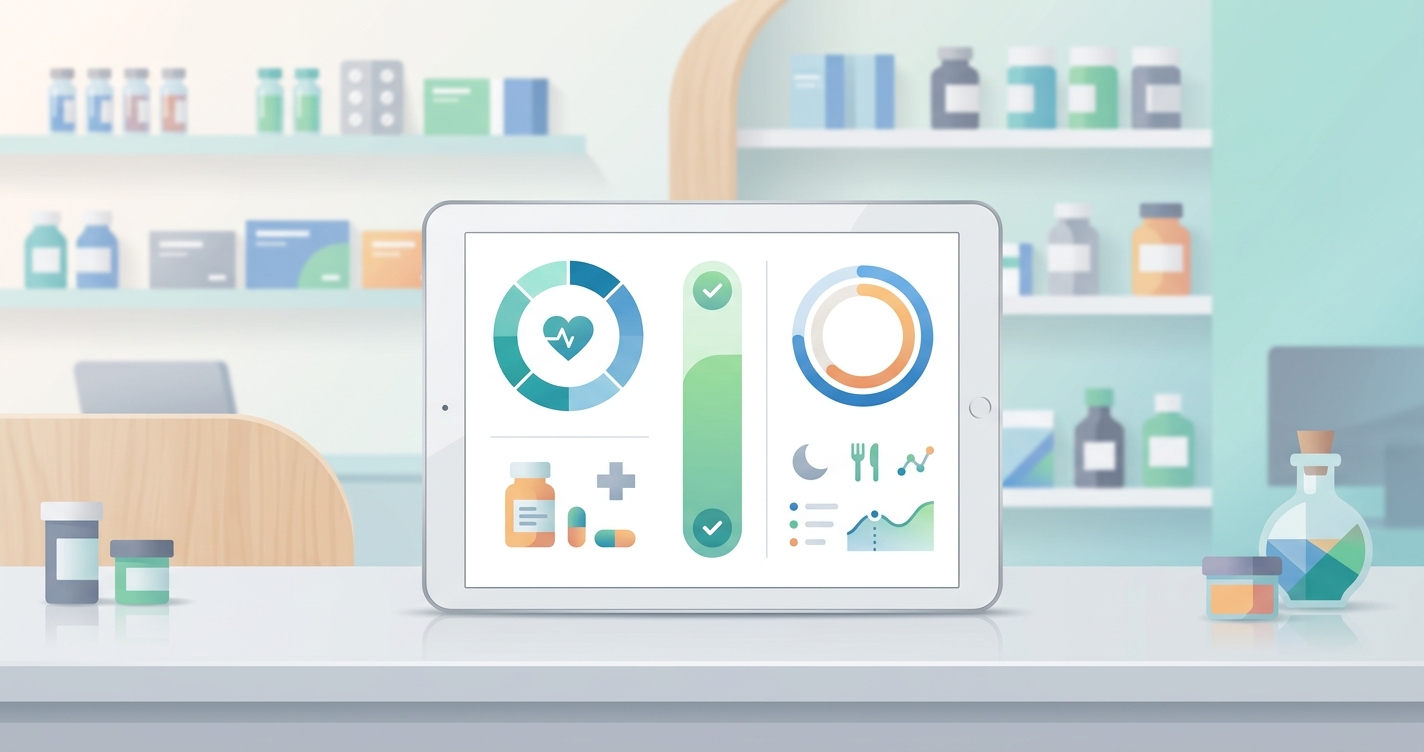
Retail pharmacies are actively transitioning from their traditional role of medication dispensing into comprehensive access points for preventive care. For pharmacy IT and retail health product managers, this shift requires rapidly scaling clinical touchpoints across thousands of locations. However, outfitting every store with physical diagnostic hardware creates logistical bottlenecks, procurement delays, and significant capital expenditure. The alternative gaining traction is software-based, branded health screening for pharmacies, which uses existing in-store digital infrastructure to capture physiological data.
By replacing mechanical cuffs with optical software, retail chains can deploy health check stations that scale infinitely while maintaining complete control over the patient experience.
"Over the last five years, the use of retail clinics has grown by 200 percent, with 55 percent of consumers now open to using these convenient access points for their preventive healthcare and screening needs."
- CVS Health Research Institute, 2023
Scaling operations: branded health screening for pharmacies
The U.S. retail clinics market reached USD 2.85 billion in 2024, according to a report by Fortune Business Insights, and is projected to expand at a compound annual growth rate of 12.6 percent through 2032. To capture this growth, retail health teams need scalable ways to conduct basic intake and physiological monitoring.
Historically, adding a health check to a pharmacy required purchasing expensive, bulky physical kiosks. These units take up valuable retail floor space, require constant calibration, and demand regular mechanical maintenance. Today, the focus has shifted toward licensing a white label health monitoring platform that utilizes remote photoplethysmography (rPPG). This technology uses the camera already embedded in a standard commercial tablet to measure changes in light reflection on the human face, calculating vital signs like heart rate and respiration rate without any physical contact.
By utilizing a custom branded vitals app or an in-store vitals kiosk powered by software rather than cuffs and clips, pharmacy chains can launch health stations that look and feel entirely proprietary. The patient interacts with the pharmacy's own branding, user interface, and loyalty system, while the complex algorithmic processing happens quietly in the background.
Comparing retail health kiosk architectures
When evaluating how to deploy health checks across hundreds of locations, procurement teams must weigh the operational realities of hardware versus software solutions.
| Feature | Legacy Hardware Kiosk | Software-Based rPPG Kiosk |
|---|---|---|
| Primary Sensors | Blood pressure cuffs, pulse oximeter clips, scales | Standard RGB cameras in commercial tablets |
| Floor Space Required | Significant (requires dedicated seating and large chassis) | Minimal (can be wall-mounted or placed on existing counters) |
| Maintenance Model | Requires physical technicians for mechanical calibration | Updates deployed remotely via mobile device management |
| Cross-Infection Risk | High (requires cleaning of physical cuffs between users) | Zero (completely contactless optical measurement) |
| Brand Customization | Limited to external decals and basic interface colors | Full control over UI, UX, and software workflows |
| Deployment Speed | Slow (bottlenecked by manufacturing and shipping logistics) | Fast (software downloaded to off-the-shelf tablets) |
Key requirements for enterprise deployments
When enterprise procurement teams and hospital IT evaluate a health platform OEM technology for retail deployment, they look for specific architectural requirements:
- Device agnosticism: The software must run smoothly on standard iPads, Android tablets, or Windows-based interactive displays already approved by corporate IT.
- Localized processing: To meet privacy regulations and reduce latency, the optical processing should ideally happen on the edge device rather than streaming raw video to a remote server.
- Seamless EHR integration: Data captured during an in-store health check must flow directly into the pharmacy management system or the partner health system's electronic health record.
- Brand control: The user interface must allow for complete customization of colors, typography, and workflow to match the retail brand's exact specifications.
- Maintenance scalability: Software updates can be pushed remotely to thousands of locations overnight, eliminating the need for technicians to visit stores to repair physical sensors.
Navigating the build vs. buy decision
For digital health startup founders and hospital IT directors partnering with retail chains, adding physiological measurement capabilities forces a critical strategic decision. They must choose between building the technology internally or licensing an existing platform.
Building a proprietary optical measurement tool requires assembling a team of computer vision engineers, data scientists, and regulatory experts. The technical challenge is not simply detecting a pulse. It is ensuring the algorithm performs accurately across diverse skin tones, varying ambient lighting conditions, and different hardware setups found across hundreds of retail locations. This process can take years of research and development, clinical trials, and optimization before the software is stable enough for public deployment.
Conversely, licensing a health platform OEM technology allows retail health teams to bypass the research and development phase entirely. By integrating a proven, third-party engine via an application programming interface, product managers can focus their engineering resources on what actually differentiates their business. They can prioritize the user experience, clinical workflows, and patient engagement strategies. This approach significantly reduces time to market and mitigates the technical risk associated with building complex biometric algorithms from scratch.
Industry applications in retail environments
How are retail health teams actually deploying this technology? The workflows vary based on the clinical objective and the store layout.
Self-service waiting areas
Many pharmacies experience bottlenecks at the consultation window. By mounting standard tablets in the waiting area, pharmacies allow patients to initiate a self-service vital sign check while they wait for a vaccination or a pharmacist consultation. The patient follows on-screen prompts, looks at the camera, and receives their measurements in less than a minute. This data can be automatically sent to the pharmacist's dashboard, saving time during the actual consultation.
Pharmacist-Led Consultations
For more comprehensive medication therapy management or chronic disease monitoring, the pharmacist can use a tablet equipped with the screening software inside a private consultation room. Instead of applying a blood pressure cuff or a pulse oximeter, the pharmacist simply angles the tablet toward the patient while discussing their medication adherence. This frictionless process improves the patient experience and allows the pharmacist to maintain continuous conversation without the physical interruption of applying medical hardware.
Loyalty app integration
The most sophisticated retail chains are moving beyond the physical store by integrating the same white-label vitals technology into their consumer-facing mobile applications. A patient can perform a health check using their own smartphone at home, and the results are tied to their pharmacy loyalty account. If the software detects a trend that warrants attention, the app can automatically prompt the patient to schedule an in-store consultation or a telehealth appointment, driving both foot traffic and clinical engagement.
Current research and evidence
The shift toward software-based screening is supported by ongoing clinical validation of remote photoplethysmography in public health settings. A systematic review and implementation study by Rizal et al., published in 2023 through the National Institutes of Health, examined the deployment of vital signs-based healthcare kiosks utilizing contactless sensors. The researchers validated the capacity of these kiosks to calculate pulse rate and respiratory rate using standard camera feeds. They noted the potential of this technology to improve screening efficiency while drastically reducing the risk of cross-infection inherent in shared physical cuffs.
Furthermore, market researchers emphasize the economic imperative of these scalable deployments. Fortune Business Insights noted in their 2024 analysis that the broader global health screening market, valued at USD 327.68 billion, is increasingly driven by preventive care initiatives that require low-cost, high-throughput technologies. For retail pharmacies, replacing mechanical hardware with an algorithmic engine is a direct response to this economic pressure, allowing them to expand their service footprint without proportionate increases in capital expenditure.
The future of pharmacy health screenings
The next phase of retail health will likely erase the boundary between the in-store vitals kiosk and the patient's living room. As telehealth white label vitals platforms become more sophisticated, pharmacy chains will operate hybrid models. A patient might initiate a screening on their phone, consult with a remote physician via the pharmacy's app, and then pick up their prescription at the local branch, all within a single, unified brand experience.
Hardware will continue to be abstracted away. The camera, whether on a specialized in-store display or a consumer smartphone, is becoming the universal health sensor. For hospital IT and retail product managers, the strategic imperative is no longer sourcing the best physical equipment, but securing the most robust, flexible, and accurate software engine to power their proprietary digital health ecosystem.
Frequently asked questions
What is a white label health monitoring platform? A white label platform is a software solution built by a specialized technology provider that another company licenses, rebrands, and integrates into their own products. In retail health, this allows a pharmacy to offer camera-based vital sign screening under its own logo and user interface without having to engineer the complex optical algorithms from scratch.
How does an in-store vitals kiosk work without physical cuffs? Modern software-based kiosks use a technology called remote photoplethysmography. The camera on a standard tablet or display captures microscopic changes in the light reflecting off a patient's face as their heart beats. The software analyzes these optical signals to calculate vital signs like heart rate and respiration rate entirely contact-free.
Can this technology integrate with our existing pharmacy management system? Yes. Enterprise-grade platforms are designed with API-first architectures. This means the vital sign data captured by the camera can be securely transmitted into an electronic health record, a pharmacy management system, or a patient loyalty database, provided the integration is configured correctly by the IT team.
Is it faster to deploy software kiosks compared to hardware kiosks? Absolutely. Because software-based kiosks rely on standard commercial hardware like iPads or Windows tablets, IT teams can bypass complex supply chains. Once the hardware is procured, the custom branded vitals app can be deployed remotely to thousands of devices simultaneously using standard mobile device management tools.
As pharmacies and retail clinics expand their preventive care footprint, the underlying technology must scale without creating hardware bottlenecks. Building a custom branded vitals app or an in-store kiosk requires a robust algorithmic engine that operates seamlessly behind your proprietary interface. Circadify is actively addressing this space by providing the foundational contactless vital sign technology that powers enterprise health deployments. If your hospital IT or retail health team is evaluating how to integrate scalable software-based screening without sacrificing brand control, explore our platform capabilities and request a partner consult at https://circadify.com/custom-builds.