
How Hospital IT Adds Vitals Tracking Without New Hardware
How hospital IT teams add camera-based vitals to existing patient apps with hospital vitals tracking software without hardware, no devices to ship or manage.
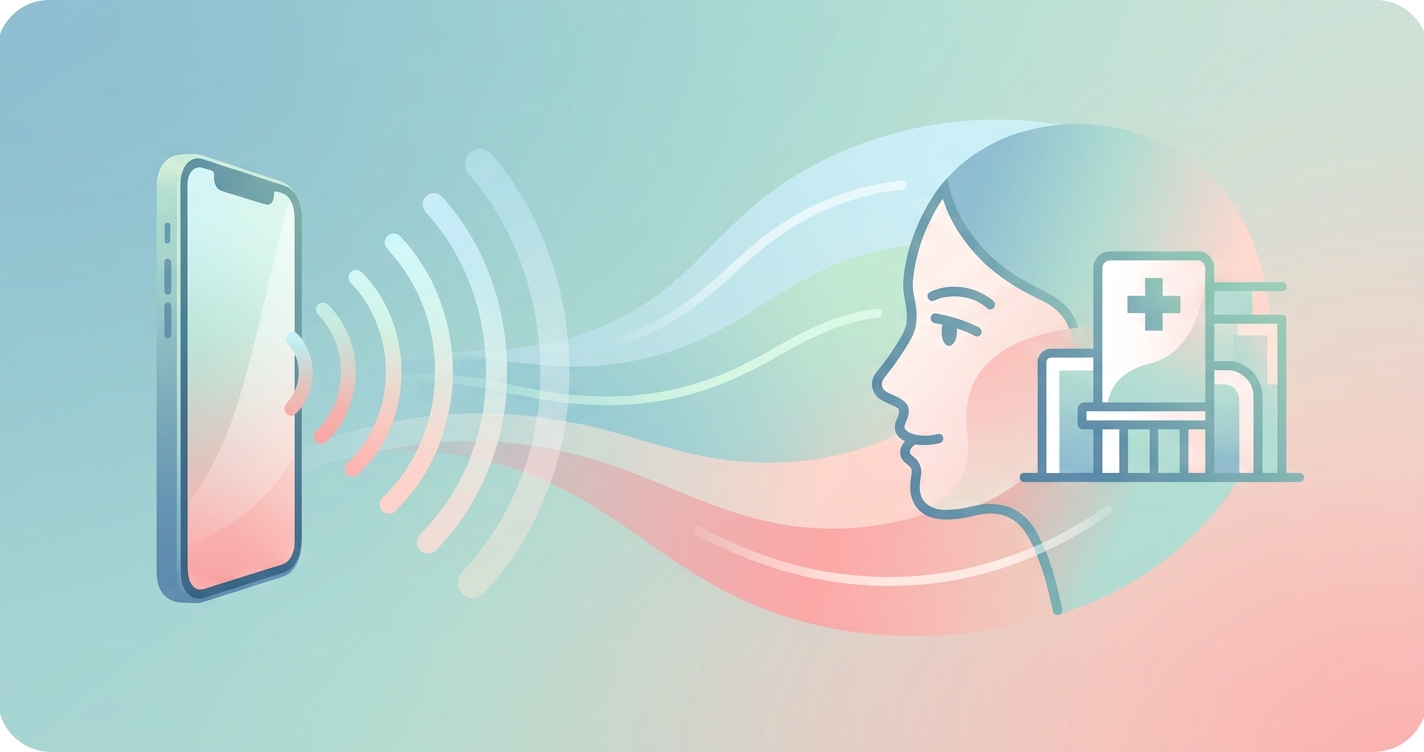
Hospital IT teams rarely get the luxury of a clean slate. They inherit an electronic health record, a patient-facing portal, a discharge app, and a procurement process that treats every new physical device as a multi-year commitment involving biomedical engineering, asset tagging, sterilization protocols, and battery logistics. So when a clinical sponsor asks for remote vital signs after discharge or before a virtual visit, the instinct to reach for a box of peripherals collides with the reality of who has to manage them. This is where hospital vitals tracking software without hardware has moved from a curiosity to a serious line item, because it lets the same camera already sitting in a patient's phone become the sensor, with nothing to ship, charge, or recover.
The contactless vital signs monitoring market, covering camera-based and rPPG technologies, was valued at roughly USD 1.4 billion in 2025 and is projected to reach USD 4.5 billion by 2035, a compound annual growth rate of 12.3 percent, according to WiseGuyReports (2025).
What hospital vitals tracking software without hardware actually means
The technology underneath is remote photoplethysmography, or rPPG. A standard smartphone or tablet camera records subtle color changes in the skin of the face caused by blood moving through capillaries with each heartbeat. Signal processing and, increasingly, deep learning models translate those micro-fluctuations into heart rate, respiration rate, and related measures. Because the sensor is the camera the patient already owns, the entire monitoring workflow shifts from a hardware supply chain into a software integration project.
For a hospital IT decision-maker, that distinction changes the entire risk profile. A device program means inventory, loss rates, reimbursement for unreturned units, cleaning between patients, and a help desk fielding calls about pairing and firmware. A software approach means an SDK or API embedded into an app the hospital already controls. The patient holds their phone to their face for roughly a minute, and structured vitals flow back into the same systems clinicians already read.
The phrase no-device patient monitoring captures the operational appeal, but the strategic appeal is white label. A telehealth white label vitals layer means the measurement engine carries the hospital's brand, not a vendor's, so the patient never leaves the trusted environment of the health system app.
Hardware programs versus software-only vitals: a side-by-side view
The decision usually comes down to total cost of ownership and how much of that cost lands on the IT and biomedical teams rather than on a one-time purchase order. The table below frames the comparison hospital IT typically builds for a steering committee.
| Factor | Device-based remote monitoring | Hospital vitals tracking software without hardware |
|---|---|---|
| Up-front capital | Per-unit device purchase across patient population | License or per-measurement fee, no hardware spend |
| Logistics | Shipping, returns, cleaning, asset tracking | None; uses patient's existing phone |
| Onboarding time | Days to weeks per patient cohort | Minutes; in-app capture |
| IT support burden | Pairing, firmware, battery, replacement | App and integration support only |
| Loss and breakage | Ongoing replacement cost | Not applicable |
| Patient reach | Limited by device availability | Scales to any smartphone owner |
| Integration target | Device gateway plus EHR | SDK or API into existing app and EHR |
| Branding | Third-party device and app | Fully white-labeled to the health system |
A few patterns tend to drive the conversation once that table is on the screen:
- The recurring operational cost of a device fleet often dwarfs the original purchase price within the first two years.
- Patient reach expands immediately because most candidates already carry a capable camera.
- The integration effort moves into a domain IT already knows: APIs, identity, and data routing rather than physical asset management.
- A white-label model keeps the patient inside the health system's own brand and privacy posture.
Industry applications inside the hospital
Discharge and readmission monitoring
The 30-day readmission window is where remote vitals earn their keep. Heart failure and post-surgical patients can capture heart rate and respiration from home and feed trends back to a care team, all without a device that has to be mailed, retrieved, and sanitized. Because the capture lives in the discharge app, adherence depends on a habit the patient already has rather than on managing a new gadget.
Pre-visit intake for virtual and in-person care
Hospital remote vitals collected before an appointment let clinicians walk into a visit with baseline numbers already recorded. A patient completes a short scan in the waiting-room app or at home the night before, and the values populate the chart. This compresses rooming time and gives telehealth visits a layer of objective data they otherwise lack.
Population health and ambulatory programs
For chronic disease cohorts spread across a region, no-device patient monitoring is often the only model that scales. Distributing devices to thousands of patients is rarely viable, but a software layer reaches anyone with a smartphone, which broadens program eligibility without a proportional rise in logistics cost.
Staffing-constrained units
Camera-based spot checks can supplement, not replace, nursing observation in lower-acuity settings, freeing staff from routine manual vitals where appropriate and clinically sanctioned.
Current research and evidence
The evidence base for camera-based vitals has matured well beyond proof of concept. A 2024 clinical validation study published in PMC reported that rPPG-derived pulse rate showed strong agreement with ECG in cardiovascular disease patients, with a mean absolute error of 1.061 beats per minute. For respiration, a hospital-based trial indexed in PMC found excellent agreement, around 96.0 percent, between an rPPG system and control methods across a large patient sample.
Respiration research continues to refine the boundaries. A 2024 evaluation in MDPI of photoplethysmography-based respiration monitoring during high-intensity interval training reported an average root mean square error of 2.13 breaths per minute, useful context for understanding where motion stresses the signal. A comprehensive review in PMC on heart rate measurement using rPPG and deep learning notes that learning-based approaches increasingly outperform conventional computer vision methods for artifact removal and heart rate estimation.
The literature is also honest about limits. Reporting summarized by News-Medical (2024) describes how rPPG accuracy can drop sharply at elevated heart rates, and performance degrades under poor lighting, motion, and across the full range of skin tones. For hospital IT, the practical takeaway is that vendor selection should weight validation breadth, signal-quality handling, and guidance on capture conditions as heavily as headline accuracy numbers.
The future of hospital vitals tracking software without hardware
Three trajectories are worth watching. First, the measurement set is widening. Heart rate and respiration are well established, while blood pressure trends and oxygen saturation estimates are active research targets that will likely reach production gradually and with appropriate clinical framing. Second, edge processing is moving more computation onto the device, which reduces video transmission, tightens privacy, and lowers bandwidth demands on hospital networks. Third, integration is standardizing. As FHIR-based observation resources become the default exchange format, dropping camera-derived vitals into an EHR will look like any other structured data flow rather than a bespoke project.
The market data points the same direction. With contactless monitoring forecast to more than triple in the decade to 2035, hospital IT teams that build the integration patterns now, identity, consent capture, data routing, and white-label branding, will be positioned to add measurements as the science clears them, without revisiting the underlying architecture each time.
Frequently asked questions
Does adding camera-based vitals require replacing our existing patient app? No. The common model is an SDK or API embedded into the app the hospital already owns. The measurement engine runs inside the existing experience, and results route to the same destinations the team already uses, which is the core of hospital vitals tracking software without hardware.
How do these vitals get into our EHR? Through standard integration. Captured values are returned as structured data and mapped to EHR observation fields, increasingly via FHIR resources, so they appear alongside other recorded vitals rather than in a separate silo.
Is camera-based measurement accurate enough for clinical programs? Peer-reviewed studies show strong agreement for heart rate and respiration under good conditions, with a 2024 validation reporting a mean absolute error near 1 beat per minute for pulse rate. Accuracy depends on lighting, motion, and patient cohort, so intended use and clinical oversight should be defined per program.
What does white label mean for our patients? It means the entire measurement experience carries the hospital's brand. Patients never see a third-party vendor, which preserves trust and keeps the interaction inside the health system's own privacy and consent framework.
Circadify is building toward exactly this gap between clinical demand for remote vitals and the operational drag of hardware, with a fully white-labeled, camera-based measurement engine that hospital IT can embed into existing apps. Teams evaluating a no-device path can review the integration overview and start a partnership conversation at circadify.com/custom-builds.