
Health Platform OEM Technology: How Licensing Deals Work
Break down how OEM licensing lets a company sell proven vitals technology as its own product, including pricing and rights basics for digital health platforms.
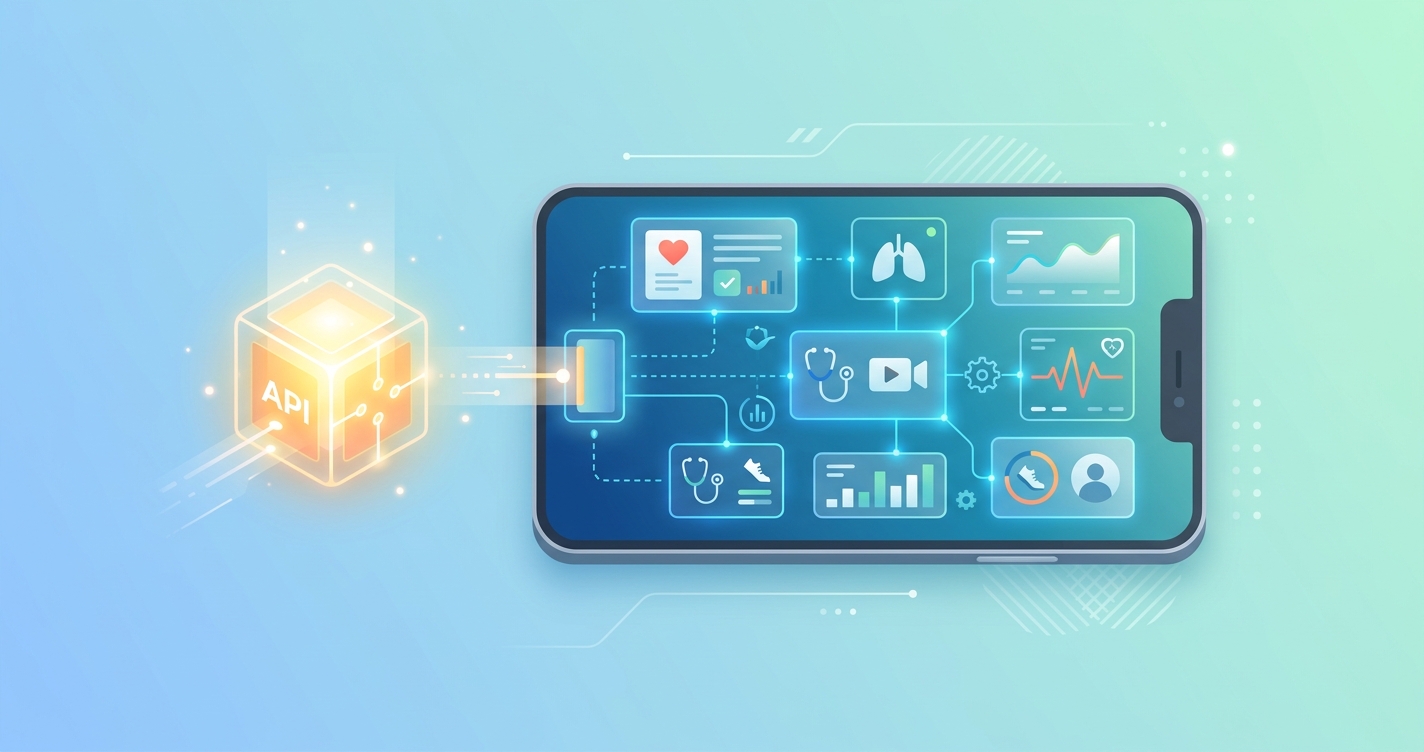
The race to deploy contactless vital signs tracking has shifted from a question of engineering capability to a question of resource allocation. Digital health startup founders, telehealth platform product managers, and hospital IT leaders increasingly recognize that building a proprietary physiological monitoring engine from scratch is an inefficient use of capital. Instead, product teams are turning to health platform OEM technology to integrate proven infrastructure under their own brand. OEM (Original Equipment Manufacturer) licensing allows a healthcare company to embed complex sensor algorithms, such as remote photoplethysmography (rPPG), into its application without inheriting the massive research and development overhead associated with continuous algorithm refinement. This shift reflects a maturing market where differentiation comes from clinical workflows and patient experience, rather than reinventing the foundational data capture layer.
"The global digital health market is projected to reach nearly $995.33 billion by 2032, driven largely by specialized business-to-business software licensing and the rapid expansion of healthcare contract manufacturing."
- 2024 Market Projections, SNS Research
The mechanics of health platform OEM technology
In the consumer electronics space, OEM relationships typically involve physical hardware manufactured by one company and branded by another. In the digital health software ecosystem, an OEM relationship usually revolves around licensing proprietary backend engines, software development kits (SDKs), or application programming interfaces (APIs). The purchasing company integrates this processing engine into their own native application, maintaining complete control over the front-end user interface and the overarching brand experience.
The core advantage of health platform OEM technology is abstraction. A telehealth company can send video frames or raw optical data to the OEM engine, and the engine returns processed physiological data, such as heart rate or respiratory rate. The telehealth company never has to train the machine learning models, manage the device-specific camera calibration, or maintain the computer vision pipelines.
Pricing models in these licensing deals generally fall into three categories. First, usage-based pricing charges the licensee based on the number of API calls or the volume of processing minutes. This model favors early-stage startups testing feature adoption. Second, active-user pricing charges a flat rate per patient who utilizes the feature within a given billing cycle. This aligns well with chronic care management platforms that bill monthly per patient. Finally, enterprise licensing involves a fixed annual fee for high-volume or on-premise deployments, offering predictable costs for large hospital networks.
| Resource Factor | Proprietary In-House Build | OEM Licensing Agreement |
|---|---|---|
| Initial Time to Market | 18 to 36 months | 4 to 12 weeks |
| Development Capital | High (dedicated data science team) | Low to Medium (integration engineering) |
| Algorithm Maintenance | Internal burden | Handled by vendor updates |
| Hardware Compatibility | Requires ongoing manual testing | Managed by the OEM provider |
| UI/UX Control | Complete control | Complete control |
When negotiating an agreement for health platform OEM technology, procurement teams must look beyond the initial integration fees. A robust licensing contract addresses several critical operational realities:
- Intellectual Property Rights: The contract must explicitly state that the OEM provider retains ownership of the underlying algorithm, while the purchasing company retains sole ownership of all patient data and clinical insights generated.
- Service Level Agreements: For cloud-based processing, the vendor must guarantee specific uptime percentages, usually 99.9% or higher, with defined latency thresholds to ensure the host application remains responsive.
- Regulatory Responsibilities: The agreement should outline which party is responsible for maintaining necessary quality management systems or software documentation.
- Update Management: The vendor must provide clear deprecation schedules for older API versions and guarantee backward compatibility for predetermined periods so that the host application does not break unexpectedly.
Industry applications for licensed vitals
The flexibility of health platform OEM technology allows diverse healthcare sectors to deploy complex physiological monitoring without fundamentally changing their core business models.
Telehealth Platforms
Telehealth providers face a persistent challenge regarding clinical data at the start of a virtual visit. A physician often begins a video call with no current physiological context. By licensing an OEM vitals engine, the platform can embed a quick scan into the virtual waiting room. The patient opens the telehealth app, follows a brief prompt to look at the camera, and the OEM technology processes the visual data in the background. By the time the physician joins the call, baseline metrics are already populated in the sidebar. The telehealth provider maintains its proprietary interface, while the vendor handles the complex optical processing.
Hospital IT and patient portals
Large health systems often mandate that all patient interactions occur within their unified, branded patient portal. Sending a patient a third-party app creates friction and raises data governance concerns. Hospital IT departments use OEM licensing to pull wellness-grade tracking directly into the native hospital application. This allows patients recovering from surgery or managing chronic conditions to capture their metrics using the hospital's trusted brand, routing the data securely into the electronic health record without relying on external consumer wearables.
Digital therapeutics and startups
Startups building specialized digital therapeutics, such as behavioral health interventions or cardiac rehabilitation programs, need physiological feedback to measure treatment efficacy. However, a startup focused on cognitive behavioral therapy cannot afford to spend two years building a heart rate extraction algorithm. Using health platform OEM technology allows these founders to license the vital signs component immediately, focusing their engineering capital on the therapeutic intervention and the user journey.
Current research and evidence
The academic study of digital health commercialization highlights why building from scratch is increasingly risky. A 2025 study published in the Journal of Medical Internet Research by researchers Rahel Sophie Martjan, Sascha Noel Weimar, and Orestis Terzidis from the Karlsruhe Institute of Technology analyzed the business model frameworks for startups developing medical software.
The researchers identified the regulatory value arc as a central component of any digital health business model. They noted that integrating compliance frameworks directly dictates a product's financial viability. Developing proprietary medical software requires immense capital to navigate this regulatory value arc, from initial conformity assessments to post-market surveillance.
For many digital health companies, taking on this burden internally destroys their profit margins. By utilizing an OEM model, the purchasing company effectively delegates a large portion of this quality assurance burden to the vendor. The vendor, amortizing the cost of compliance across dozens of licensees, can maintain the necessary technical documentation and quality management systems far more efficiently than a single startup building a proprietary feature.
The future of health platform OEM technology
The trajectory of digital health infrastructure points toward increasingly sophisticated edge computing and faster regulatory adaptation. As smartphone processors become more capable of handling complex machine learning tasks locally, OEM providers are shifting their SDKs from cloud-reliant APIs to on-device processing. This evolution reduces latency, eliminates cloud hosting costs for the vendor, and inherently improves data privacy since raw visual data never leaves the user's device.
Furthermore, the integration of Predetermined Change Control Plans into product strategies will allow OEM algorithms to update autonomously within predefined boundaries. This means that a hospital licensing a vitals engine could receive continuous algorithm accuracy improvements without needing to push major version updates to their patient portal or trigger new internal audits. As the underlying global digital health market scales toward a projected one trillion dollars, the reliance on modular, licensed infrastructure will become the standard operating procedure for any application requiring physiological data.
Frequently asked questions
What is the difference between white-label and OEM in health tech?
While the terms are often used interchangeably, white-label generally refers to purchasing a complete, ready-to-use application that is rebranded with your logo and color scheme. OEM licensing typically refers to integrating a specific foundational technology, like an SDK or API, into an application you have already built.
Who owns the patient data in an OEM licensing agreement?
The licensee (the healthcare company purchasing the technology) almost always retains full ownership of the patient data. The OEM vendor acts as a data processor. Contracts must be carefully structured to ensure the vendor cannot claim ownership of the clinical data flowing through the engine.
Does licensing an OEM product guarantee regulatory compliance?
No. While the OEM provider may maintain robust quality management systems for their specific engine, the final integrated product is subject to its own evaluation based on its intended use. The purchasing company must still ensure their overall application complies with local healthcare regulations.
How quickly can a team integrate an OEM vitals SDK?
Depending on the architecture of the host application and the complexity of the desired user experience, a standard integration can take anywhere from a few weeks to a few months. This is a fraction of the time required to build, train, and test a proprietary vital signs algorithm from scratch.
Circadify is addressing this space by offering flexible, high-performance contactless monitoring infrastructure designed for modern care delivery. For digital health startups, telehealth platforms, and hospital systems looking to accelerate their roadmap without absorbing massive research costs, learn more about our licensing and partnership opportunities by visiting circadify.com/custom-builds.