
How Employer Wellness Programs Deploy Branded Health Screening Portals
A research-backed analysis of how employer wellness programs deploy branded health screening portals, covering rollout models, participation design, data governance, and buyer priorities in 2026.
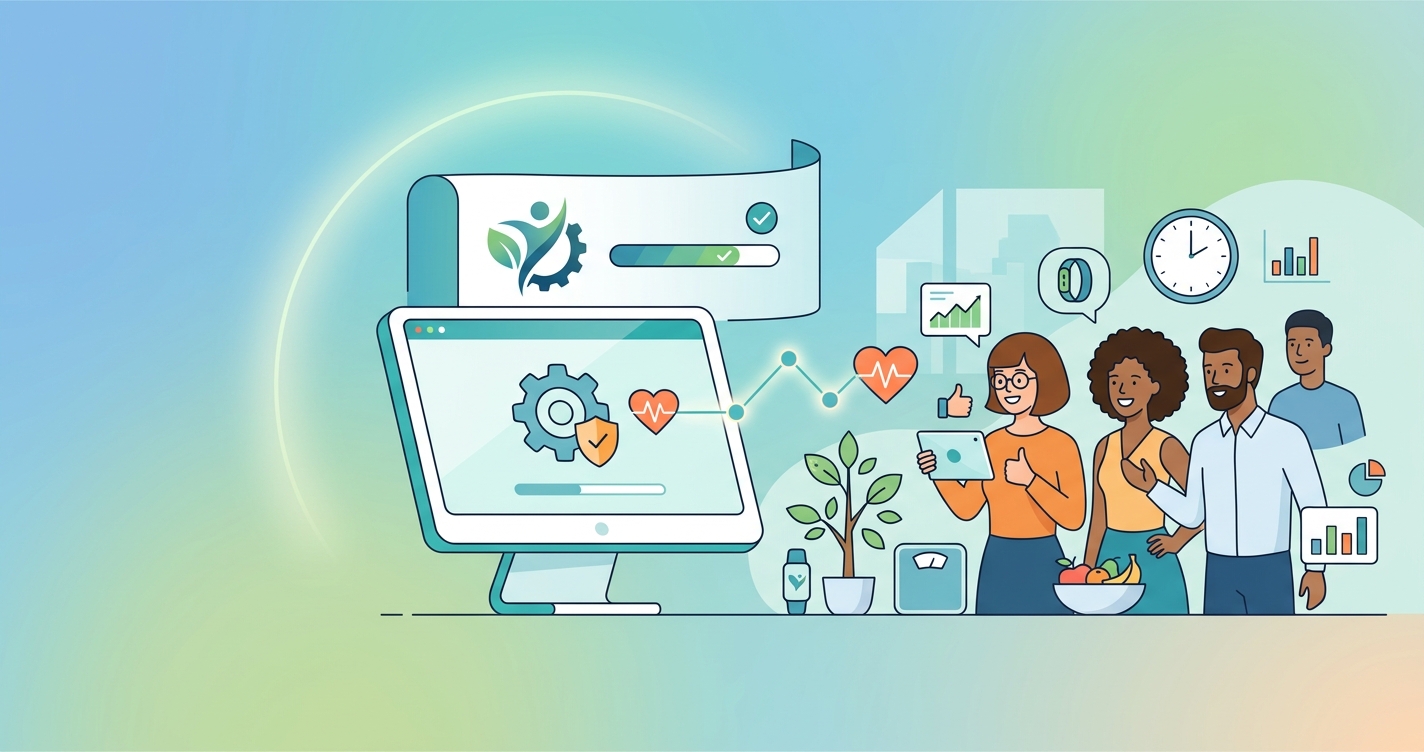
An employer wellness branded health screening portal has become a fairly practical answer to an old problem: employers want screening and engagement data, but they do not want a fragmented experience spread across vendors, spreadsheets, pop-up events, and generic apps. In 2026, the portal matters less as a marketing asset and more as an operating layer. Benefits teams want one branded front door for invitations, consent, screening workflows, results, reminders, and follow-up.
"Among large firms offering health risk assessments, 56% do so, and 44% offer biometric screenings." — KFF, 2025 Employer Health Benefits Survey
Employer wellness branded health screening portal: what employers are actually buying
When buyers talk about a branded screening portal, they usually mean a bundle of capabilities rather than a single page:
- employee onboarding and eligibility checks
- health risk assessments and screening workflows
- appointment, self-scan, or at-home completion paths
- reporting for employers, brokers, and program operators
- privacy controls that keep employee-level data separated from employer dashboards
That last point is where a lot of deals get serious. The 2025 KFF Employer Health Benefits Survey shows that workplace screening is still common among large employers, but the operational burden is changing. Employers are trying to move screening away from once-a-year onsite events and toward a year-round digital model that works for hybrid workforces, multi-site employers, and benefit programs that need better participation tracking.
| Deployment model | What it looks like | Best fit | Main operational risk |
|---|---|---|---|
| Event-based portal | Employees use the portal to register for onsite or near-site screenings | Traditional annual wellness campaigns | Traffic spikes, low follow-through after the event |
| Distributed digital portal | Employees complete assessments, scheduling, and follow-up remotely | Hybrid and multi-location employers | Participation drops if setup feels tedious |
| Embedded benefits portal | Screening sits inside a larger branded benefits experience | Employers with year-round engagement goals | Integration complexity across carriers and vendors |
| White-label program portal | Third-party platform runs the workflow under employer or broker branding | Consultants, TPAs, and wellness operators | Generic workflows that do not match employer policy |
I keep coming back to the same pattern: employers are not just asking for a portal that looks branded. They want one that reduces coordination work.
Why rollout strategy matters more than feature count
A portal can have every expected feature and still flop if the rollout model is wrong. That lesson shows up in the research too. In a 2019 randomized clinical trial published in JAMA, Dr. Zirui Song of Harvard Medical School and Dr. Katherine Baicker of the University of Chicago studied a workplace wellness program across 160 worksites. The program improved some self-reported behaviors, including regular exercise, but it did not materially change biometric outcomes or spending over 18 months.
That result gets oversimplified a lot. It does not mean wellness programs are pointless. It means the presence of a program is not enough. For employers deploying a screening portal, engagement design matters more than the checkbox that says a wellness initiative exists.
In practice, strong rollout plans usually share a few traits:
- the employer defines who the portal is for before launch
- incentives, communication, and completion windows are set up in advance
- employees can complete the workflow in more than one way
- support teams know what happens after a high-risk or incomplete result
Without that structure, the portal turns into a nicer wrapper around the same participation problems employers already had.
The architecture employers now expect
The market has moved beyond simple challenge apps and static wellness dashboards. Buyers now expect screening portals to support segmented populations, flexible completion paths, and clear reporting layers.
A useful way to think about the architecture is to separate the portal into three layers.
Employee experience layer
This is the visible part: login, branding, eligibility, questionnaires, screening instructions, reminders, and results presentation. For distributed workforces, this layer has to work on mobile first.
Program operations layer
This is where campaign rules, completion logic, incentive triggers, escalations, and partner workflows live. If a portal works for employees but creates a manual mess for brokers or wellness teams, the deployment usually stalls after year one.
Data governance layer
The HERO, ACOEM, and Care Continuum Alliance joint consensus statement on biometric health screening for employers, approved in 2013, put unusual emphasis on privacy boundaries. The statement argued that screening programs need clear data handling practices and should not blur the line between screening, diagnosis, and employer access. That still matters. In 2026, buyers want branded reporting, but they are even more interested in role-based access, tenant separation, and auditability.
| Portal layer | What buyers want in 2026 | What breaks trust fast |
|---|---|---|
| Employee experience | Simple login, mobile completion, clear next steps, recognizable branding | Long forms, confusing instructions, weak reminder logic |
| Program operations | Incentive tracking, segmentation, partner workflows, configurable campaigns | Manual exports, unclear ownership, no exception handling |
| Data governance | Role-based access, consent records, employer-safe reporting, audit trails | Oversharing, poor permissions, weak retention controls |
Industry applications
Large employers with mixed onsite and remote workers
These employers usually need more than a once-a-year fair. The portal becomes the coordination point for screening invitations, deadlines, remote options, and incentives. The harder the workforce is to gather in one place, the more valuable the portal becomes.
Benefits consultants and TPAs managing multiple employer clients
This group tends to care about multi-tenant administration. They need one underlying platform that can present different employer brands, completion rules, and reporting views without rebuilding the workflow every quarter.
Employer wellness programs tied to broader digital health offerings
Some employers want screening to feed follow-up coaching, navigation, or condition-management programs. In those cases, the portal is not the destination. It is the intake point into a broader branded health experience.
Current research and evidence
The evidence base around workplace wellness is a mix of policy surveys, operational guidance, and clinical or economic research. A few sources stand out.
KFF reported in its 2025 Employer Health Benefits Survey that 56% of large firms offering health benefits provide health risk assessments and 44% provide biometric screening. Those numbers matter because they show screening is still mainstream in employer health strategy, especially among larger firms.
Song and Baicker's JAMA trial is still one of the more useful reality checks in the category. Their study found better self-reported exercise and some positive behavior changes, but no significant near-term changes in clinical markers or cost. For portal design, the lesson is pretty direct: participation and workflow quality are the lever, not the promise of instant ROI.
The HERO/ACOEM/CCA biometric screening consensus statement also remains relevant because it frames what screening programs are supposed to do and what they are not supposed to do. Employers can sponsor screening, but diagnosis and clinical interpretation still belong in the healthcare lane. That distinction shapes how portal results, follow-up messaging, and reporting need to be designed.
Wellable's 2025 Employee Wellness Industry Trends Report points to another shift: employers increasingly want centralized, personalized digital programs rather than one-off events. That is part of why branded portals keep gaining ground. They give benefits teams a persistent experience instead of a campaign that disappears after one enrollment season.
| Source | Key finding | Why it matters for portal deployments |
|---|---|---|
| KFF (2025) | 56% of large firms offer health risk assessments; 44% offer biometric screening | Screening remains a core employer workflow, not a niche add-on |
| Song & Baicker, JAMA (2019) | Wellness programs changed some behaviors but not short-term clinical or spending outcomes | Portal success depends on engagement design and operations, not hype |
| HERO / ACOEM / CCA consensus statement (2013) | Employer screening programs need privacy safeguards and clear role boundaries | Data governance is a buying criterion, not back-office cleanup |
| Wellable (2025) | Employers are shifting toward centralized digital wellness programs | Persistent branded portals fit that move better than event-only programs |
The future of employer wellness screening portals
The next phase looks less like a corporate wellness campaign and more like benefits infrastructure.
A few changes are already visible:
- more year-round screening flows instead of annual events only
- more smartphone-friendly completion options for distributed workers
- stronger segmentation for employers, consultants, and partner administrators
- more pressure to connect screening with broader engagement and follow-up programs
I would also expect the buyer conversation to keep shifting away from surface branding and toward administration. The winning platforms will probably be the ones that let employers run different screening models under one branded framework without creating extra work for HR, brokers, or employees.
Frequently asked questions
What is a branded health screening portal in employer wellness?
It is a digital portal that lets employees complete assessments, enroll in screenings, review results, and receive follow-up under the employer's or program sponsor's brand.
Why are employers replacing event-only screening models?
Because hybrid work, distributed teams, and year-round benefits engagement are hard to support with a single onsite event. Portals make scheduling, reminders, and remote completion easier to manage.
What do employers care about most when evaluating a portal?
Usually mobile usability, privacy controls, reporting, incentive tracking, and whether the workflow reduces administrative burden for HR and program partners.
Does a branded portal guarantee better wellness outcomes?
No. Research suggests outcomes depend on participation, workflow design, and what happens after the screening, not just the fact that a portal exists.
If your team is planning a branded screening rollout, solutions like Circadify Custom Builds are built for organizations that want a white-label launch path without rebuilding the full platform stack. Related reading on this site: White-Label Health Monitoring Explained, How to Evaluate White-Label Health Technology Partners, and How Payers Build Member Health Portals With White-Label Tech.