
Why is my doctor asking me to use a health app from my phone before my visit?
Why clinics now use doctor requested app monitoring before appointments, and how white-label vitals platforms power that branded pre-visit experience.
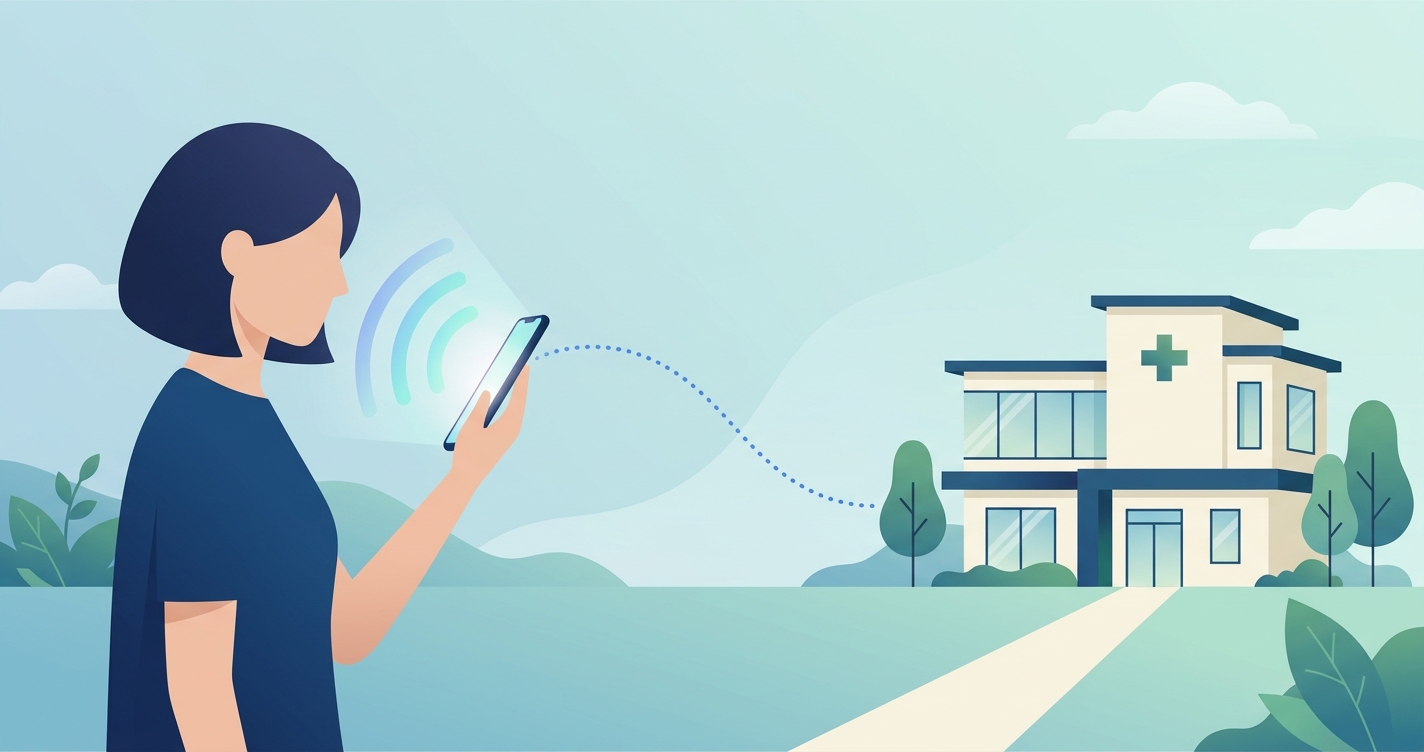
If your clinic recently sent a text asking you to open an app and hold your phone up to your face before your appointment, you are seeing a quiet shift in how care is delivered. That app is almost certainly running a pre-visit check, and the practice of doctor requested app monitoring has moved from pilot programs into routine workflows. What looks like a small convenience to a patient is actually a structural change for hospitals and telehealth platforms, and most of the apps doing this work are not built by the clinic at all. They are branded front ends sitting on top of licensed measurement engines.
By 2025, more than 71 million Americans, roughly 26 percent of the population, are expected to use some form of remote patient monitoring service, while telemedicine adoption is projected to reach 82 percent, up from 23 percent in 2020. Source: Digital Health Adoption Statistics, MyPreOp, 2025.
What doctor requested app monitoring actually does
When a provider asks you to use an app before a visit, the goal is to arrive at the appointment with data already in hand. Instead of spending the first several minutes of a short visit taking a blood pressure cuff reading and logging vitals, the clinician opens your chart and sees a recent set of measurements you captured at home. Doctor requested app monitoring usually covers heart rate, respiratory rate, and in many cases an estimate of blood pressure and oxygen saturation, collected either through a connected device or, increasingly, through the smartphone camera itself.
The camera-based version relies on remote photoplethysmography, or rPPG. The technique reads tiny color changes in the skin of your face caused by blood flowing beneath the surface, then converts those signals into vital sign estimates. A 2024 review of rPPG for vital signs monitoring led by researchers and published in the journal Bioengineering (PMC10873837) confirmed that the method can capture heart rate, respiratory rate, and oxygen saturation without any contact, while noting ongoing work on motion, skin tone variation, and ambient light.
For the patient, the experience is simple. For the organization that sent the request, there is a much longer chain of decisions behind that single screen.
Why your clinic's app probably is not built by your clinic
Very few hospitals or telehealth companies write their own vital sign measurement software. The science behind rPPG, the signal processing, and the regulatory documentation take years to develop. So most care organizations license the engine from a technology vendor and wrap it in their own brand. The app you see carries your clinic's name, logo, and colors, but the measurement work underneath comes from a white-label health monitoring platform.
This is why the same underlying capability can show up under dozens of different clinic and platform names. The brand is the clinic's. The engine is shared infrastructure.
| Approach | Who builds the measurement engine | Time to launch | Brand on the app | Typical adopter |
|---|---|---|---|---|
| Build in-house | The clinic or platform itself | 18 to 36 months | Their own | Large systems with research budgets |
| Off-the-shelf consumer app | A third party, unbranded | Immediate | The vendor's | Individual patients, not clinics |
| White-label rPPG solution | Licensed vendor engine | Weeks to a few months | The clinic's own | Telehealth platforms, hospitals, RPM firms |
| Hardware-based RPM kit | Device manufacturer | Months plus shipping logistics | Mixed | Chronic care programs |
The white-label path is what makes the pre-visit app feel native. Patients trust an app that looks like it came from their own provider, and providers get a measurement system without standing up a data science team.
The benefits driving hospital and telehealth adoption
Pre-visit monitoring spread quickly because it solves several problems at once. From the operator's side, the appeal of an rPPG white label solution looks like this:
- No hardware to ship, charge, or replace, which removes the largest cost line in traditional remote monitoring.
- Faster appointments, because vitals are captured before the clinician joins.
- Higher data capture rates, since patients use a phone they already own rather than a device they have to set up.
- A consistent branded experience, so the custom branded vitals app reinforces the provider relationship instead of sending patients to an outside tool.
- Earlier signal on deterioration, letting triage teams flag concerning readings before a visit even happens.
For telehealth platforms specifically, the case is even sharper. A video visit has no built-in way to measure vitals. Adding a contactless check turns a conversation into something closer to an exam, and it does so without mailing a single cuff.
Industry Applications
Telehealth platforms
Virtual care companies use pre-visit monitoring to close the data gap that comes with seeing a patient through a screen. By embedding telehealth white label vitals into the existing patient flow, a platform can show the clinician a fresh set of readings the moment the call begins. Our earlier analysis of how telehealth platforms add vitals without shipping devices covers the operational mechanics of this in more detail.
Hospital systems and specialty clinics
Large systems use the same workflow for pre-operative screening, chronic care check-ins, and post-discharge follow-up. The branded app becomes a lightweight monitoring layer that feeds the existing electronic health record. Because the engine is licensed, the IT team can focus on integration and security rather than measurement science.
Remote patient monitoring companies
RPM firms that historically depended on shipped devices are adding camera-based capture as a lower-cost tier. It widens enrollment, since patients who would never set up a hardware kit will open an app, and it improves the economics of programs that run on thin reimbursement.
Current research and evidence
The evidence base behind contactless monitoring has grown steadily. The 2024 Bioengineering review (PMC10873837) summarized dozens of validation studies comparing rPPG against medical-grade reference devices for heart rate and respiratory rate, and described active research on oxygen saturation estimation. The authors were direct about the open challenges: motion artifacts, performance across diverse skin tones, and lighting conditions all affect signal quality, and serious vendors design around these constraints rather than ignoring them.
The market context explains the urgency. The global remote patient monitoring market is projected to grow from 34.4 billion dollars in 2025 to 138.4 billion by 2033, according to figures cited in the 2025 IntuitionLabs Remote Patient Monitoring Landscape Report. Prevounce's 2025 statistics roundup adds that remote monitoring saw a 39 percent increase in adoption over five years, the fastest of any digital health category. When a category grows that fast, organizations rarely have time to build their own engine, which is exactly why licensing accelerates.
It is worth being precise about claims. Camera-based readings are estimates produced by software, and their suitability for a given clinical decision depends on the specific product, its testing, and its regulatory status. A responsible white-label provider is transparent about what its engine has been validated to do and what it has not.
The Future of doctor requested app monitoring
Expect the pre-visit app to become the default rather than the exception. Three shifts are likely to define the next few years:
- Measurement will move from a one-time pre-visit snapshot toward periodic background checks, giving clinicians trend data instead of a single point.
- Branding will deepen, with providers wanting the entire monitoring experience to feel like their own product rather than a bolt-on, which favors fully white-labeled platforms.
- Integration will tighten, so readings flow directly into the chart and trigger care pathways automatically. Our piece on integration points for connecting a white-label platform to an EHR outlines where that work concentrates.
The throughline is that patients will keep seeing their own provider's brand, while the engine underneath becomes shared, specialized infrastructure. That separation of brand and engine is the model that makes pre-visit monitoring scalable.
Frequently asked questions
Why did my doctor ask me to use an app before my appointment?
Your provider wants vital sign data captured before you arrive, so the visit can focus on your concerns instead of basic measurements. This pre-visit check, a form of doctor requested app monitoring, also helps care teams spot concerning readings earlier.
Is the app actually made by my clinic?
Usually not. Most clinics license the measurement engine from a technology vendor and apply their own branding. The app carries your provider's name, but the underlying vitals technology is typically a white-label platform shared across many organizations.
How does the app measure my vitals through the camera?
It uses remote photoplethysmography, or rPPG, which reads subtle color changes in your facial skin caused by blood flow and converts them into estimates of heart rate, respiratory rate, and other vitals. Good lighting and holding still improve the reading.
Are camera-based vital readings reliable?
Research confirms rPPG can capture several vital signs without contact, though accuracy depends on the specific product, lighting, motion, and how it was tested. Readings are software estimates, and reputable vendors are clear about what their system has and has not been validated to measure.
Circadify is building in this space, developing fully white-labeled contactless vitals infrastructure so hospitals and telehealth platforms can launch branded pre-visit monitoring under their own name instead of building an engine from scratch. Teams exploring a custom branded deployment can start a partnership conversation at circadify.com/custom-builds.