
Custom Branded Vitals App: A Founder's Launch Checklist
A founder's checklist for launching a custom branded vitals app, covering branding, HIPAA compliance, build-vs-license decisions, and realistic launch timelines.
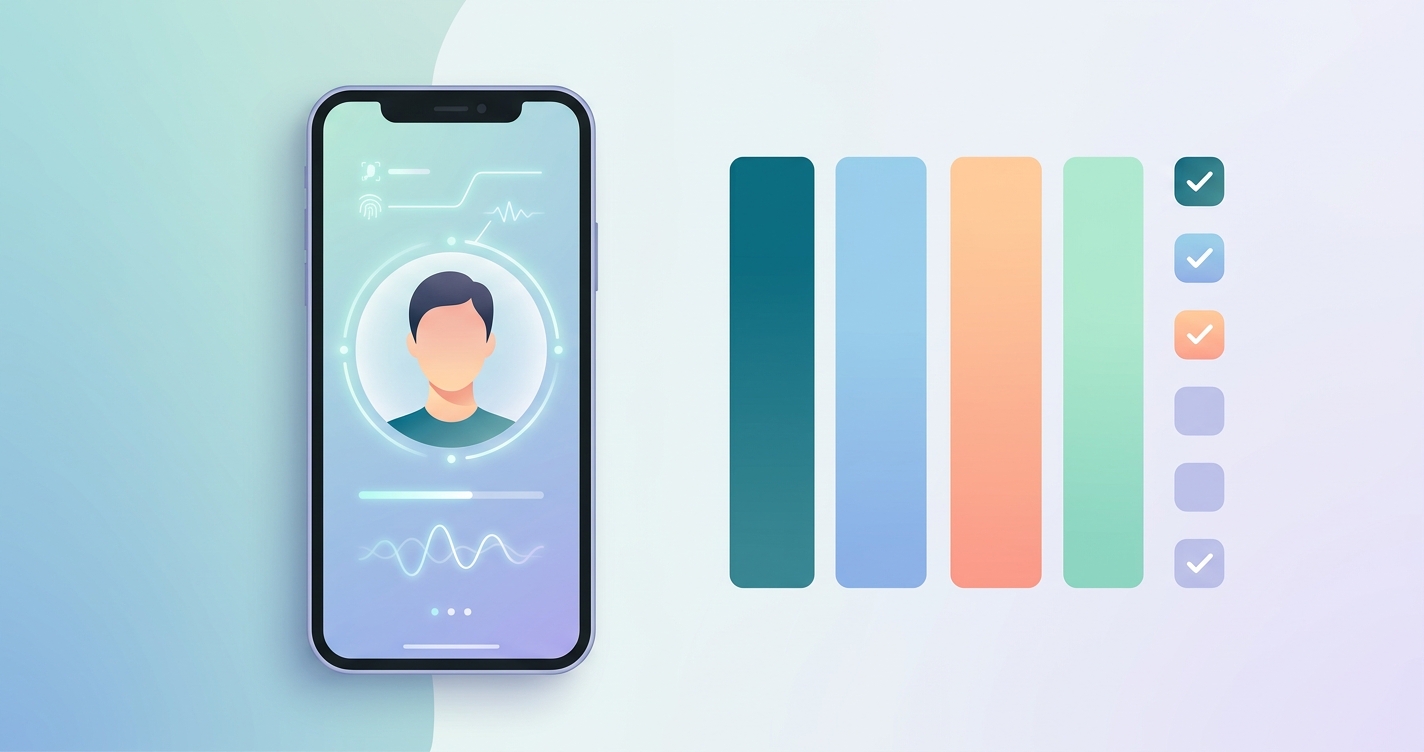
Founders entering contactless health monitoring are no longer asking whether the technology works. They are asking how fast they can put their own name on it without inheriting a multi-year engineering bill or a compliance liability. A custom branded vitals app is the product of that calculation: a measurement experience that looks entirely like the founder's brand while the harder parts of signal processing, security, and infrastructure are handled underneath. The decisions made in the first few weeks of that project tend to determine whether launch happens in a quarter or in a year.
The global contactless remote patient monitoring market is estimated to reach USD 33.8 billion in 2026 and grow toward USD 100.4 billion by 2036, with North America holding roughly a 40 percent share, according to Metastat Insights (2026).
That growth curve is why so many teams are racing to ship. But speed without a checklist is how founders end up with a beautiful app that cannot pass a security review or a privacy assessment from their first enterprise buyer.
What a custom branded vitals app actually requires
A custom branded vitals app is more than a logo on a measurement screen. It is a stack of four layers that have to be planned together: brand and user experience, the measurement engine, the compliance and data layer, and the go-to-market motion. Founders who treat these as sequential steps usually discover late that a branding choice created a compliance problem, or that an integration assumption broke the timeline.
The measurement engine is the part most teams underestimate. Camera-based vitals rely on remote photoplethysmography (rPPG), which uses a device camera and signal models to estimate heart rate, respiratory rate, and related metrics from subtle color changes in the skin. Building that engine from scratch involves data collection, model training, and validation across skin tones and lighting conditions. Licensing it through a white label vitals app setup moves that work off the founder's roadmap and shrinks the path to a branded health app launch.
The market context favors speed. The broader health app industry generated roughly USD 3.5 billion in revenue in 2025 across 313 million users and 405 million downloads, according to Business of Apps (2026). White-label digital health platforms can reduce time-to-market by 30 to 60 percent compared with custom builds, based on the same 2025 industry reporting. For a founder, that difference is often the gap between catching a funding window and missing it.
Build vs license: the core decision
Before any checklist makes sense, founders have to settle the build-versus-license question, because it changes every downstream timeline and cost. The table below frames the trade-offs that matter most for a custom health app checklist.
| Decision factor | Build from scratch | License a white-label engine |
|---|---|---|
| Time to first branded release | 12 to 24+ months | 6 to 16 weeks |
| Upfront engineering cost | High; dedicated ML and data team | Lower; integration-focused |
| Measurement validation burden | Owned entirely by the founder | Shared with the platform vendor |
| Brand control | Full | Full, when the platform is truly white-label |
| Compliance scaffolding | Built and maintained internally | Inherited and configurable |
| Ongoing model improvement | Internal roadmap responsibility | Handled by the vendor |
| Best fit | Teams where the engine is the differentiator | Teams where the brand and clinical workflow are the differentiator |
The pattern across most early-stage teams is consistent. If the measurement algorithm is not the company's core defensible asset, building it rarely pays back before the market moves. The founders who build tend to be those raising specifically to own novel sensing IP. Everyone else is buying time, and time is the scarce resource.
A step-by-step launch checklist
A branded health app launch runs more smoothly when the work is sequenced rather than parallelized blindly. The following checklist reflects how disciplined teams stage a custom branded vitals app.
- Define the clinical or wellness claim first. Decide whether the app makes wellness-tier estimates or pursues a regulated medical claim, because that single choice drives compliance scope, copy, and disclaimers.
- Lock the brand system before integration. Colors, typography, measurement-screen motion, voice, and the onboarding flow should be specified so the white-label layer can be themed in one pass.
- Choose the build-vs-license path using the table above, and document the reasoning for investors and future hires.
- Map data flows. Identify where personal health information is captured, transmitted, stored, and deleted, and who the business associates are.
- Stand up the compliance layer in parallel with design, not after. Encryption, access control, and audit logging are easier to design in than retrofit.
- Plan integrations early. Decide whether results flow into an EHR, a telehealth visit, or a member portal, and confirm the data formats.
- Build a measurement quality plan. Define how the app guides users on lighting, distance, and stillness so estimates stay reliable.
- Pilot with a constrained cohort. Test with real users across devices and conditions before a public release.
- Prepare go-to-market assets. Procurement teams and enterprise buyers will ask for security documentation on day one.
Branding without breaking compliance
The branding layer feels like the easy part, and that is the trap. A custom branded vitals app must keep the user experience fully owned while the regulatory posture stays defensible. Disclaimers, consent language, and result framing are brand-facing copy that also carry compliance weight. Wellness-tier language and medical-claim language are not interchangeable, and editing them like marketing copy can quietly change the product's regulatory category.
The compliance and data layer
HIPAA expectations tightened in 2025. Apps handling electronic protected health information are expected to implement encryption such as AES-256 for data at rest and TLS 1.2 or higher in transit, multi-factor authentication, audit logging, and automatic session termination, according to guidance summarized by Medical Web Experts (2025). Newer privacy rules also emphasize mobile and app security and stronger requirements for business associates and cloud handling. For a founder, the practical takeaway is that the data layer should be designed against these controls from the first sprint, because enterprise and clinical buyers will audit them.
Industry Applications
The same white label vitals app setup serves several buyer types, and the launch checklist shifts slightly for each.
Telehealth Platforms
Telehealth platforms add camera-based vitals to remove hardware logistics from virtual visits. With telemedicine adoption reported near 82 percent in 2025, the appeal is capturing objective measurements inside a video visit without shipping devices. The checklist emphasis here is integration into the existing visit workflow and clinician-facing display of results.
Digital health startups
For early-stage startups, the engine is rarely the differentiator. The brand, the user experience, and a specific clinical workflow usually are. These teams lean toward licensing so engineering can focus on retention and the care model rather than signal processing.
Hospital and Enterprise IT
Hospital systems and large payers evaluate a custom branded vitals app through procurement and security review. The checklist for these buyers front-loads documentation: data flow diagrams, business associate agreements, and access control evidence. The RPM devices market is forecast near USD 67.2 billion in 2026, per Global Market Insights (2025), and enterprise buyers are the segment driving much of that spend.
Current research and evidence
The evidence base supports contactless measurement as a scalable layer rather than a wholesale replacement for contact devices. Industry analysts including Metastat Insights (2026) and Global Market Insights (2025) attribute growth to chronic disease prevalence, demand for home-based care, and AI-driven monitoring. rPPG specifically reduces dependence on wearables and enables continuous, scalable measurement across clinical, home, and population-health settings.
Measurement reliability still depends on conditions. Research on camera-based vitals consistently points to lighting, motion, and skin-tone diversity in training data as the factors that most affect estimate quality. This is the strongest argument for licensing a maintained engine: ongoing model improvement and validation are continuous work, not a one-time launch task.
The future of custom branded vitals apps
The direction is toward measurement as embedded infrastructure. As the contactless monitoring market approaches USD 100 billion by 2036, founders will increasingly treat the vitals engine the way they treat payments or messaging today: a licensed capability, not a thing to rebuild. The differentiation will move up the stack to brand, clinical workflow, and the data experience. Expect tighter EHR and telehealth integrations, more configurable compliance scaffolding, and faster theming so a custom health app checklist compresses from quarters to weeks.
Frequently asked questions
How long does it take to launch a custom branded vitals app? A custom build of the measurement engine commonly runs 12 to 24 months or more. A white label vitals app setup typically reaches a branded release in roughly 6 to 16 weeks, since the engine, compliance scaffolding, and infrastructure are already in place and the work centers on branding and integration.
Do I need FDA clearance for a branded vitals app? It depends on the claim. Wellness-tier estimates and regulated medical claims fall into different categories. The intended use and the language in the app determine the regulatory path, which is why founders should fix the claim before writing any user-facing copy.
What does white-label actually mean for branding control? A genuine white-label platform lets the founder own the entire visible experience, including the app name, design system, onboarding, and result screens, while the measurement engine and infrastructure run underneath. The end user sees only the founder's brand.
What compliance controls should be in place at launch? For apps handling protected health information, expect encryption at rest and in transit, multi-factor authentication, audit logging, automatic session timeouts, and business associate agreements with any vendors touching the data, consistent with 2025 HIPAA guidance.
Circadify is building white-label infrastructure for exactly this space, so founders can ship a branded vitals experience on a proven engine instead of starting from zero. If you are weighing whether to build the measurement layer yourself or license it, a build-vs-license consult can map your claim, timeline, and integration needs. Start a partnership inquiry to scope your launch.