
Can an app guess my blood pressure just by looking at my face?
Exploring the science behind contactless blood pressure measurement from a smartphone camera, its current capabilities, and what it means for telehealth.
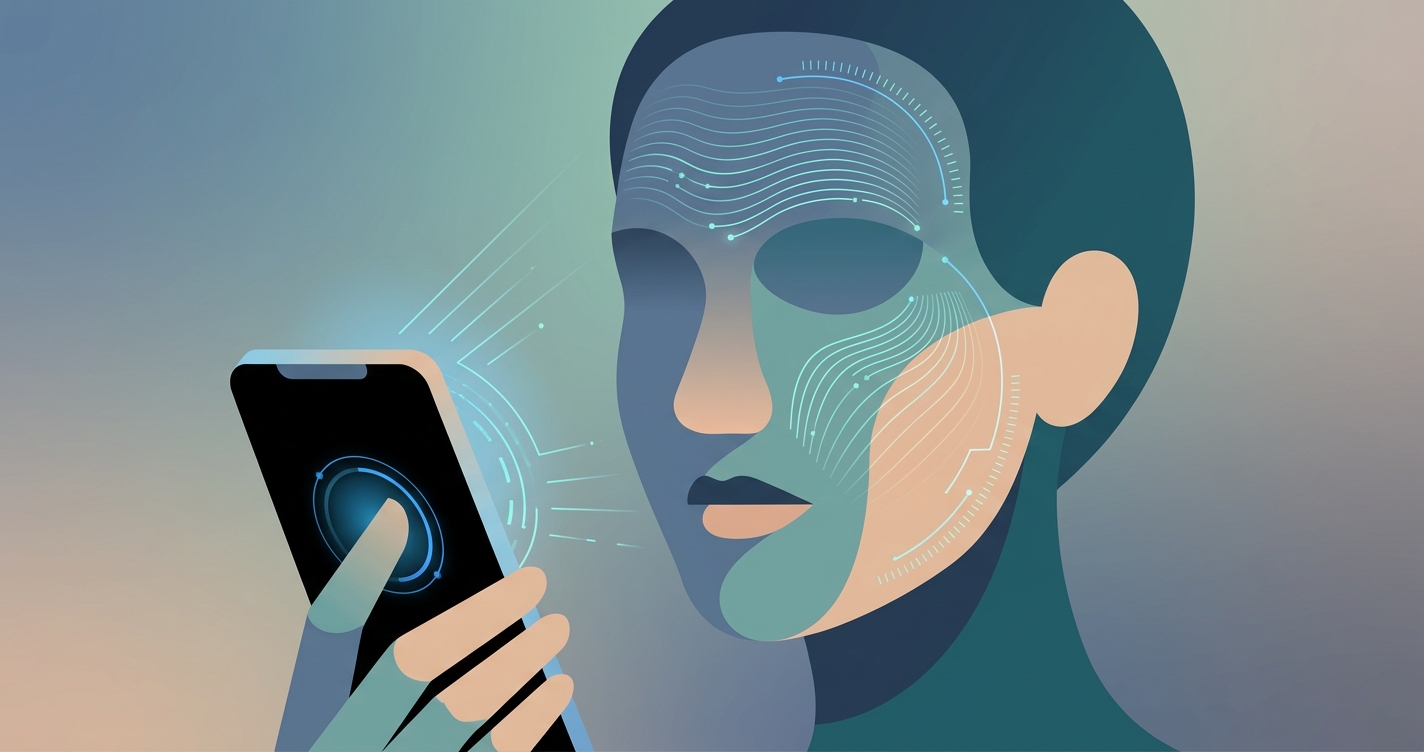
The question of whether a smartphone app can guess your blood pressure by looking at your face sounds like science fiction, but it is at the forefront of a significant shift in digital health. For telehealth product managers and digital health founders, understanding the technology's capabilities and limitations is critical. While a simple selfie cannot "guess" with clinical certainty today, the underlying technology, remote photoplethysmography (rPPG), allows a device to estimate cardiovascular function by analyzing subtle changes in light reflected from the skin. The real question is not if it works, but how well, and under what conditions. The quality of the blood pressure from face camera engine sets the ceiling on performance.
"An estimated 1.28 billion adults aged 30, 79 years worldwide have hypertension, most (two-thirds) living in low- and middle-income countries. An estimated 46% of adults with hypertension are unaware that they have the condition."
- World Health Organization (WHO), 2023
How a blood pressure from face camera model works
The ability for a camera to estimate blood pressure relies on a technique called remote photoplethysmography (rPPG). This method is an optical technique that detects changes in blood volume at the skin's surface. When your heart beats, it pushes blood through your vessels, causing them to expand and contract. This tiny, imperceptible change in volume alters how light is reflected from your skin. A standard smartphone camera is sensitive enough to pick up these changes in its video feed.
The process starts by capturing a short video of a person's face. The software's AI engine identifies key regions of interest (ROIs) on the face, such as the forehead and cheeks, where the blood flow signal is strong. It then analyzes the light information from these regions over time. Specifically, it tracks the subtle shifts in the color spectrum, invisible to the human eye, that correspond to the pulse wave.
Researchers like Kang Lee at the University of Toronto have been pivotal in advancing a specific application of this called Transdermal Optical Imaging (TOI). Their work, published in 2019, demonstrated that by analyzing the light reflected by hemoglobin, a protein in red blood cells, it is possible to model the pressure wave and derive estimations for both systolic and diastolic blood pressure. A deep learning model, trained on vast datasets of facial videos paired with traditional cuff readings, learns the complex relationship between the optical signal and actual blood pressure.
Measurement modalities: contactless vs. traditional cuffs
For product leaders in telehealth, choosing the right measurement modality involves trade-offs between convenience, user adherence, and clinical precision.
| Feature | Traditional Cuff (Oscillometric) | Contactless (rPPG/TOI) |
|---|---|---|
| Method | Measures air pressure required to occlude and release an artery. | Analyzes reflected light from facial blood flow (rPPG). |
| User Action | Wrap cuff on arm, inflate, and wait for reading. | Look at smartphone camera for 15-60 seconds. |
| Measurement Type | Point-in-time, episodic. | Can be point-in-time or provide trend data. |
| Key Advantage | Established medical standard; high precision. | High accessibility, no hardware, frictionless user experience. |
| Key Limitation | Can be uncomfortable; subject to cuff placement errors. | Sensitive to lighting, motion, and skin tone. Not a medical device. |
Industry applications for contactless vitals
The ability to measure vital signs without dedicated hardware opens up new possibilities for platforms that have traditionally been software-only.
Telehealth and virtual care platforms
Integrating contactless vitals allows telehealth providers to gather more objective data during virtual consultations. A patient can perform a quick scan before or during a video call, providing the clinician with immediate data points for heart rate, respiratory rate, and blood pressure trends without the need to ship any devices. This enriches the virtual visit, moving it beyond a simple conversation.
Digital health and wellness apps
For apps focused on fitness, stress management, or general wellness, adding contactless vitals can significantly increase user engagement. Offering users the ability to track their physiological response to a meditation session or a workout creates a powerful feedback loop. It transforms an app from a passive content library into an interactive health hub.
Remote patient monitoring (rpm) programs
While not a replacement for medical-grade RPM devices for critically ill patients, contactless vitals can serve a crucial role in "step-down" monitoring or for managing lower-risk populations. The low barrier to entry, no hardware logistics, makes it scalable for monitoring large patient groups for trends and flagging anomalies that may require a more precise, cuff-based reading.
Current research and evidence
The scientific foundation for estimating blood pressure from face camera video is growing. The landmark 2019 study led by Kang Lee at the University of Toronto and published in the American Heart Association journal Circulation: Cardiovascular Imaging was a key moment. Using transdermal optical imaging, their model analyzed two-minute facial videos from over 1,300 subjects and produced blood pressure estimations that showed a high correlation with traditional cuff-based measurements.
However, subsequent research has highlighted the significant challenges that remain. A core issue identified in deep learning-based approaches is that prediction errors often increase for patients with abnormally high or low blood pressure. Models trained on datasets with a normal distribution of blood pressure values tend to perform best around the average and struggle with the extremes. This is a critical consideration for any clinical or wellness application.
Factors that impact the quality of the rPPG signal and, therefore, the accuracy of the output include:
- Lighting Conditions: Too much or too little light can saturate the camera sensor or introduce noise.
- User Motion: Head movements during the scan can disrupt the signal.
- Skin Tone: While algorithms are improving, initial studies were often conducted on a narrow range of skin tones, and ensuring equitable performance is an active area of research.
- Camera Quality: Different smartphone cameras have varying sensor quality and processing software, which can affect the raw video input.
The future of contactless blood pressure monitoring
The trajectory of contactless monitoring is pointed towards solving the current limitations. The future likely involves multi-modal approaches, where the rPPG signal is combined with other data from the phone's sensors or even user-reported information to create a more robust and personalized reading. The development of new deep learning architectures and data augmentation techniques is actively underway to improve performance across diverse populations and real-world conditions.
For digital health companies, the key is not necessarily to build these complex engines from scratch but to partner with technology providers who are dedicated to solving these core scientific challenges. As the models improve and validation studies expand, we will get closer to a world where routine blood pressure monitoring is as easy as taking a selfie.
For telehealth platform PMs and digital health founders evaluating how to offer new vital sign monitoring capabilities under their own brand, the underlying engine quality is critical. The challenges of motion, lighting, and demographic variability are precisely what separates a research-grade algorithm from a scalable platform. At Circadify, we are building the foundational engine to address this space. To learn more about our white-label solutions, visit our partnership page at circadify.com/custom-builds.