
Can a face-scan app read my vitals if my room is dark?
Exploring the science behind camera-based vital signs in low light. Learn how rPPG engine quality, not the app, determines accuracy in challenging conditions.
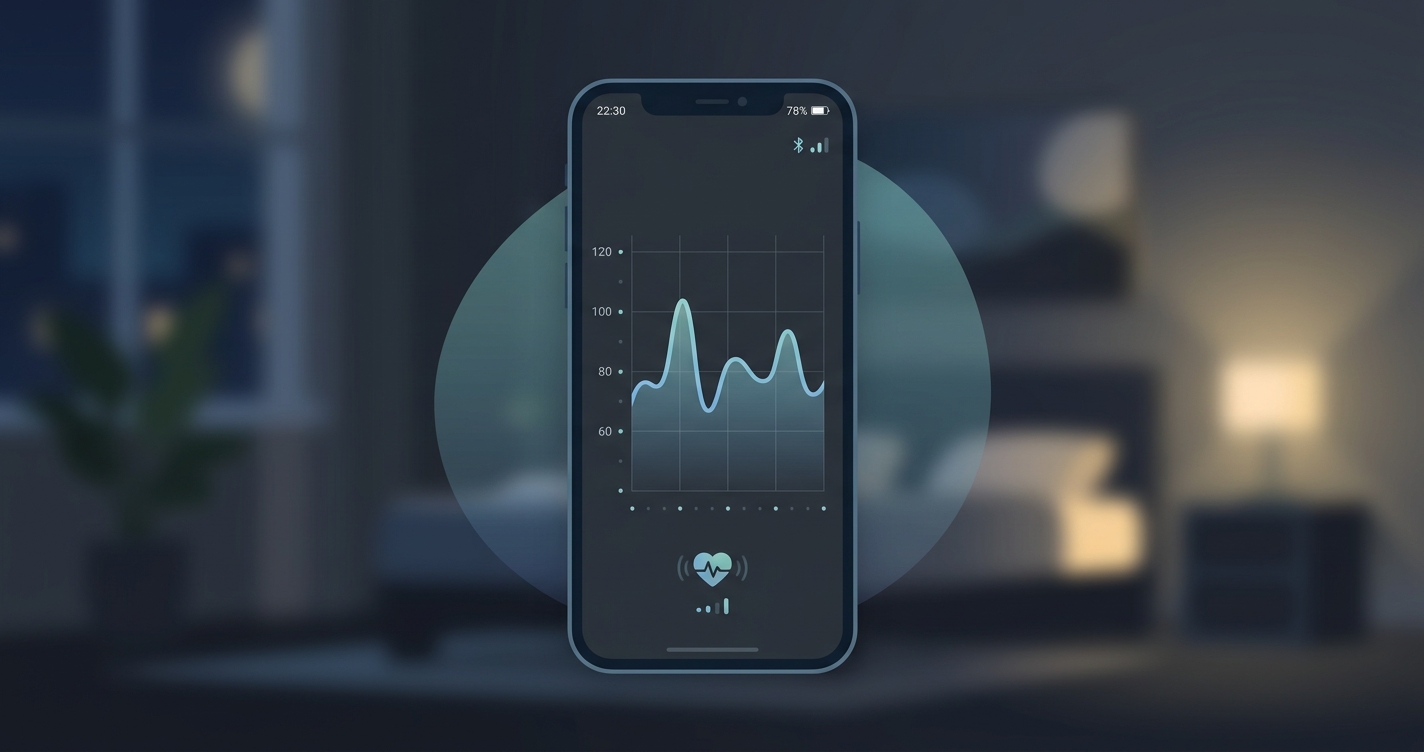
The smartphone camera is a powerful sensor, capable of more than just photos. Using a technique called remote photoplethysmography (rPPG), apps can now measure vital signs like heart rate and respiration simply by analyzing a short video of a person's face. This has enormous potential for telehealth and remote patient monitoring. But a valid question arises for any user or platform provider considering this technology: what happens when the lights go down? If a patient is in a dimly lit hospital room or a user is checking in from home at night, can a face-scan app still read their vitals accurately? The answer depends less on the app itself and more on the sophistication of the underlying rPPG engine.
The challenge of lighting is a fundamental issue of signal-to-noise ratio. For rPPG to work, the camera needs to detect subtle changes in the color of the skin as blood flows through the underlying vessels. In ideal conditions, this is straightforward. In poor lighting, the signal weakens, and the "noise" from the camera sensor and the environment can overwhelm it.
"The mean absolute error (MAE) of rPPG measurements can be minimized when light, specifically 500, 700 lux, is shone from the front." - Research from multiple studies indicates a strong correlation between lighting levels and accuracy, with performance degrading significantly in ranges as low as 30-60 lux.
The signal in the noise: why camera vitals low light accuracy depends on the engine
To understand the low-light challenge, we must first understand the mechanism of rPPG. The technology works because hemoglobin in our blood absorbs light. As the heart pumps, the volume of blood in the vessels of our face changes, causing minuscule variations in the amount of light reflected back to the camera. The green channel of a standard RGB camera is particularly sensitive to these changes, a key finding from early research in the field. A foundational 2008 paper by Wim Verkruysse and his team at the Beckman Laser Institute, "Remote plethysmographic imaging using ambient light," established that consumer-grade cameras could indeed extract these physiological signals.
However, the strength of this reflected signal is directly proportional to the amount of ambient light. When light is scarce, the camera's sensor has to work harder, often increasing its ISO or "gain." This amplifies the entire signal, including the noise, making it difficult for a basic algorithm to distinguish the true blood volume pulse from random electronic interference. This is where the quality of the rPPG engine becomes the deciding factor. A basic engine might simply fail or return a highly inaccurate reading. An advanced engine, however, is built to handle these adverse conditions, employing specific strategies to isolate the signal from the noise and improve camera vitals low light accuracy.
| Feature | Optimal Conditions | Low Light (Basic Engine) | Low Light (Advanced Engine) |
|---|---|---|---|
| Lighting Level | > 500 lux (well-lit room) | < 100 lux (dim room) | < 100 lux (dim room) |
| Raw Signal Quality | High Signal-to-Noise Ratio (SNR) | Low Signal-to-Noise Ratio (SNR) | Low Signal-to-Noise Ratio (SNR) |
| Key Challenge | Minimal; focus on motion artifacts | Signal is weak and noisy, easily lost | Distinguishing weak signal from sensor noise |
| Mitigation | Standard filtering | Fails or provides low-confidence reading | Advanced signal processing, noise reduction filters, AI-based reconstruction |
Factors influencing rPPG accuracy
While lighting is a critical variable, it is not the only one. For digital health founders and platform product managers evaluating this technology, it is crucial to understand that a robust rPPG engine must account for a range of real-world variables simultaneously.
- Motion: Head movements, talking, and even subtle changes in facial expression can introduce motion artifacts that can be much stronger than the underlying physiological signal. Advanced engines use sophisticated algorithms to track facial landmarks and compensate for motion.
- Skin Tone: The melanin in darker skin tones absorbs more light, which can reduce the strength of the reflected rPPG signal reaching the camera. This is a well-documented challenge, and leading engine providers actively work to ensure their models are trained on diverse datasets to mitigate bias and ensure equitable performance across all skin types.
- Camera Quality: The sensor in the user's device matters. A high-quality smartphone camera will naturally perform better in low light than an older, cheaper webcam. An enterprise-grade engine will be designed to characterize the input video and adapt its approach accordingly.
- Distance and Angle: The distance of the user from the camera and their angle relative to the light source can also impact the quality of the reading.
Industry applications: algorithmic and hardware solutions
The industry is actively developing solutions to make rPPG a go-anywhere technology. This isn't about waiting for better cameras; it's about smarter software that can work with the hardware people already own.
Advanced signal processing
The core of a modern rPPG engine is its signal processing pipeline. Instead of a simple analysis, these systems use multi-stage filtering and source separation techniques. They can isolate the "plethysmography" signal from other "noise" sources like camera sensor noise, subtle lighting flicker from a nearby screen, or small movements by the user.
Motion Compensation
Motion remains one of the biggest challenges for rPPG. Leading platforms address this by using advanced computer vision models. These models can identify dozens of points on the face and track them from frame to frame. When the head moves, the algorithm understands that the movement is global and can subtract its effect from the localized color changes it is trying to measure, preserving the integrity of the vital sign data.
AI-Driven Models
More recently, deep learning has revolutionized what's possible. Instead of relying on predefined formulas, AI models can be trained on vast datasets of facial videos paired with ground-truth data from medical-grade sensors. This allows the model to "learn" what a true heart rate signal looks like, even when it's buried in noise from low light, motion, and other complicating factors. These models can effectively reconstruct a clean signal from a noisy input, dramatically improving camera vitals low light accuracy.
Current research and evidence
The academic and commercial pursuit of robust rPPG continues at a rapid pace. Researchers are exploring the use of different light spectrums, such as near-infrared (NIR), which is less affected by skin pigmentation. Studies are being conducted to create larger and more inclusive datasets to train and validate AI models, ensuring they perform reliably for people of all skin tones and in a wide variety of real-world conditions. For example, a 2021 study published in Frontiers in Physiology reviewed various techniques and highlighted the need for standardized evaluation protocols to compare the performance of different algorithms under challenging conditions.
The future of low-light contactless monitoring
As rPPG engines become more resilient to challenging lighting, the applications for contactless monitoring will expand significantly. Imagine telehealth platforms that can reliably gather vitals from patients in their homes at any time of day, or hospital systems that use ambient cameras to monitor patients overnight without disturbing them with physical devices. The goal is to make data collection so seamless and robust that it fades into the background, providing clinicians with a continuous stream of information to make better decisions. This future depends entirely on the quality and reliability of the underlying engine.
Frequently asked questions
What is considered 'low light' for a camera vitals app? While there's no single standard, performance generally starts to degrade below 150 lux. A typical, comfortably lit office is around 500 lux. A dimly lit living room at night might be 50-100 lux. Advanced engines are specifically designed to perform in these sub-100 lux environments.
Do I need a special camera or a new phone? No. The goal of white-label rPPG platforms is to be device-agnostic. The technology is designed to work with the RGB cameras already found in billions of smartphones, tablets, and laptops. The "magic" is in the software engine, not the hardware.
Is it as accurate as a finger clip pulse oximeter? Camera-based methods measure the blood volume pulse, which can be used to calculate heart rate and other metrics, similar to a pulse oximeter. While accuracy in ideal conditions can be very high and comparable to contact devices for heart rate, factors like extreme low light, excessive motion, or non-compliant users can affect performance. The key is that a robust engine knows when conditions are not suitable and can provide a confidence score or reject a measurement, preventing false readings.
Choosing to integrate contactless vitals into a digital health platform is a strategic decision. The technology holds the promise of frictionless data capture and improved user engagement, but its reliability is critical. As we've seen, that reliability, especially in challenging but common scenarios like a dark room, is determined by the power of the rPPG engine you choose to license. Platforms like Circadify are focused on solving these hard engineering problems, providing solutions that digital health innovators can build their brand on. To learn more about licensing a robust vitals engine for your platform, explore our custom build options at circadify.com/custom-builds.