
Can my phone camera measure my vitals as accurately as a finger clip?
A tech-curious comparison of rPPG camera accuracy vs. pulse oximeters. We review the latest validation data for digital health founders and telehealth PMs.
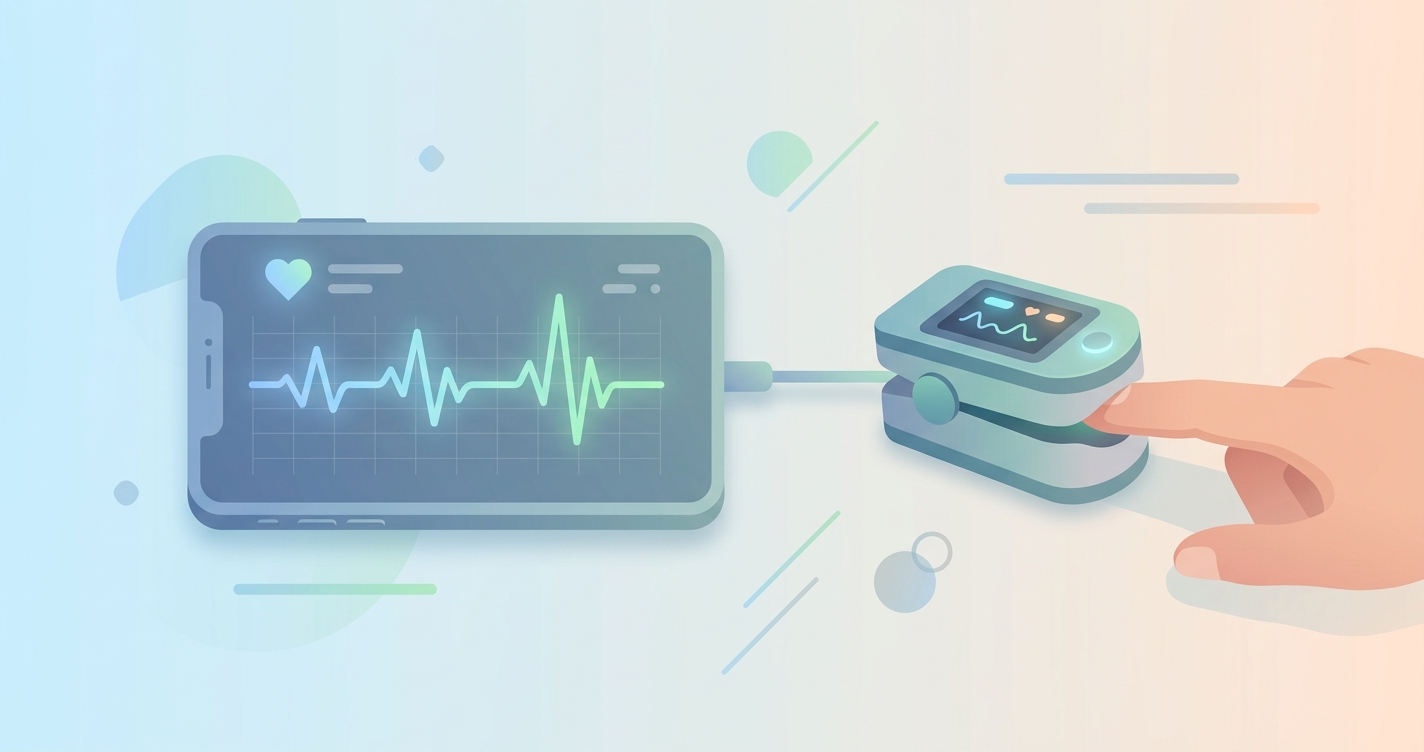
The question of whether a smartphone can perform medical-grade measurements is no longer theoretical. As remote monitoring technologies mature, digital health platforms are increasingly embedding passive vital sign monitoring directly into their applications. This shift replaces the friction of connecting and using a separate peripheral device with the simplicity of looking into a camera. But for digital health founders and product managers, the critical question remains one of validation: Can a software-based reading from a phone's camera truly compare in accuracy to a hardware-based measurement from a traditional finger-clip pulse oximeter? Answering this requires a nuanced look at the data behind camera vs pulse oximeter accuracy.
"Published research reports remote photoplethysmography (rPPG) heart rate accuracy within ±2-5 BPM (MAE) of clinical-grade devices under controlled conditions."
The core of the debate: camera vs. pulse oximeter accuracy
The comparison between a camera-based system and a traditional pulse oximeter is essentially a comparison of two different methods for achieving photoplethysmography (PPG), the optical technique of detecting volumetric changes in blood in peripheral circulation. A conventional pulse oximeter is a contact PPG device. It clamps onto a fingertip and shines light through the tissue to a detector on the other side. As blood pulses through the finger, the amount of light absorbed changes, allowing the device to calculate heart rate and blood oxygen saturation (SpO2).
Remote photoplethysmography (rPPG), the technology used by a phone camera, is a contactless PPG method. Instead of shining light through tissue, it uses the ambient light in the environment and the phone's camera to detect minute changes in the light reflected from the skin's surface. These changes, invisible to the naked eye, correspond to the blood volume pulse. Sophisticated algorithms then process this video signal to extract vital signs.
For heart rate, multiple validation studies have shown rPPG's performance to be remarkably high. A 2023 study focusing on cardiovascular disease patients found that rPPG software achieved a Mean Absolute Error (MAE) of just 1.061 beats per minute (BPM) compared to an ECG. Other studies consistently place well-implemented rPPG solutions within 2-5 BPM of clinical-grade contact devices.
For blood oxygen saturation (SpO2), the comparison is more complex. Pulse oximeters are the established standard, but they are not without their own significant accuracy issues. Research, including a 2023 review in JAMA Pediatrics, has repeatedly confirmed that pulse oximeters tend to overestimate blood oxygen levels in patients with darker skin tones, a bias that can lead to missed diagnoses of occult hypoxemia. While rPPG technology for SpO2 measurement is still evolving, the fundamental challenges related to light absorption and skin melanin content are a shared area of intense research for both contact and contactless methods.
| Feature | Camera-based (rPPG) | Clip-based (Pulse Oximeter) |
|---|---|---|
| Technology | Remote Photoplethysmography (rPPG) | Contact Photoplethysmography (PPG) |
| Primary Measurement | Heart Rate, Heart Rate Variability, Respiratory Rate | SpO2, Heart Rate |
| Heart Rate Accuracy | High (typically 1-5 BPM MAE vs. ECG) | High (typically 1-3 BPM MAE vs. ECG) |
| SpO2 Accuracy | Evolving; subject to algorithm and conditions | Established standard, but known bias with darker skin tones |
| Key Limitations | Sensitive to motion, poor lighting, skin tone variations | Requires physical contact, potential for patient discomfort, accuracy affected by poor circulation |
| User Experience | Contactless, passive, uses existing device | Requires dedicated hardware, can be intrusive |
Factors influencing rPPG performance
The accuracy of a camera-based vital sign measurement is not absolute; it is dependent on the quality of the signal and the sophistication of the algorithms used to interpret it. For product teams evaluating this technology, understanding these dependencies is crucial.
- Motion Artifacts: Head and body movements are the most significant source of noise for rPPG signals. Advanced systems increasingly use deep learning models to isolate the physiological signal from motion-related noise.
- Lighting Conditions: Poor or rapidly changing illumination can degrade signal quality. While algorithms can compensate for a wide range of conditions, extreme low light or strong backlighting remains a challenge.
- Skin Tone: Higher melanin content in darker skin absorbs more light, which can weaken the reflected signal available to the camera. This is an active area of research, with developers using advanced signal processing and multi-wavelength techniques to improve performance across all skin types.
- Distance and ROI: The distance of the user from the camera and the specific region of interest (ROI) on the face (e.g., forehead and cheeks) used for analysis can impact signal strength.
Industry Applications
The ability to measure vitals without contact or dedicated hardware is creating new opportunities across the digital health landscape.
Telehealth Consultations
For telehealth platforms, rPPG allows providers to capture essential vital signs during a virtual visit. This provides objective data points that were previously unavailable, enriching the clinical value of the consultation without requiring the patient to own or operate a separate medical device.
Remote patient monitoring (rpm)
In RPM programs for chronic conditions like hypertension or heart failure, rPPG enables effortless, longitudinal data collection. Patients can take readings from home using an app, lowering the barrier to adherence and providing care teams with more consistent data streams to manage patient health proactively.
Corporate wellness and fitness apps
Wellness apps are incorporating rPPG to track user responses to exercise, stress-management sessions, and other wellness interventions. This provides biofeedback that can increase user engagement and demonstrate the physiological impact of healthy habits.
Current research and evidence
The scientific validation of rPPG is a rapidly expanding field. A 2023 current review published on medRxiv highlights the extensive research into deep learning approaches to overcome traditional challenges like motion artifacts. Researchers from institutions like Fraunhofer IIS are focused on developing reliability metrics to provide users and clinicians with a real-time confidence score for each reading. The critical work on mitigating bias, particularly regarding skin tone, continues to be a primary focus, ensuring that these emerging technologies are equitable and effective for diverse populations. The consensus in the research community is that while challenges remain, the trajectory of rPPG accuracy, particularly for heart rate and respiratory rate, is exceptionally strong.
The future of contactless vitals
Looking ahead, the distinction between "camera" and "pulse oximeter" will likely become less about a direct accuracy competition and more about context-specific use cases. Pulse oximeters will remain critical tools in acute and clinical settings where direct, continuous monitoring is critical. However, the future of population health, preventative care, and remote diagnostics will increasingly belong to accessible, software-driven tools. Camera-based rPPG is poised to become the default method for low-friction, opportunistic vital sign measurement, integrated not just into health apps but into any platform where a user's well-being is relevant. The technology is on a path to measure a wider array of biomarkers, including blood pressure, and to fuse this data with other sensor inputs for more holistic health insights.
Frequently asked questions
- Q: Is camera-based heart rate as accurate as a chest strap?
- A: For resting heart rate, high-quality rPPG systems show very strong correlation with ECG and chest straps, often within a few beats per minute. For intense exercise with significant motion, a chest strap still provides a more stable signal.
- Q: Can the camera measure blood pressure yet?
- A: Camera-based blood pressure estimation is an area of intense research and development. While some solutions are emerging, it is generally considered a less mature measurement than heart rate or respiratory rate and is often positioned for tracking trends rather than providing diagnostic-grade readings.
- Q: Does this technology work on all skin tones?
- A: This is a critical consideration. While early rPPG algorithms showed performance degradation on darker skin due to light absorption by melanin, modern systems use advanced signal processing and AI to mitigate this bias. It's a key evaluation point when assessing any rPPG solution.
As digital health evolves, the ability to seamlessly capture vital sign data is moving from a feature to an infrastructure-level expectation. For founders and product leaders looking to build the next generation of health applications, the question is no longer if you should incorporate contactless vitals, but how. Platforms that provide a robust, white-labeled rPPG engine allow you to integrate this powerful capability under your own brand, saving years of R&D and regulatory hurdles. To explore how you can use a custom-branded vitals platform, learn more about our partnership programs at circadify.com/custom-builds.