
5 Features Enterprise Buyers Expect in a White-Label Vitals Platform
A research-backed look at the enterprise white label vitals platform features buyers now expect, from security controls to interoperability and analytics.
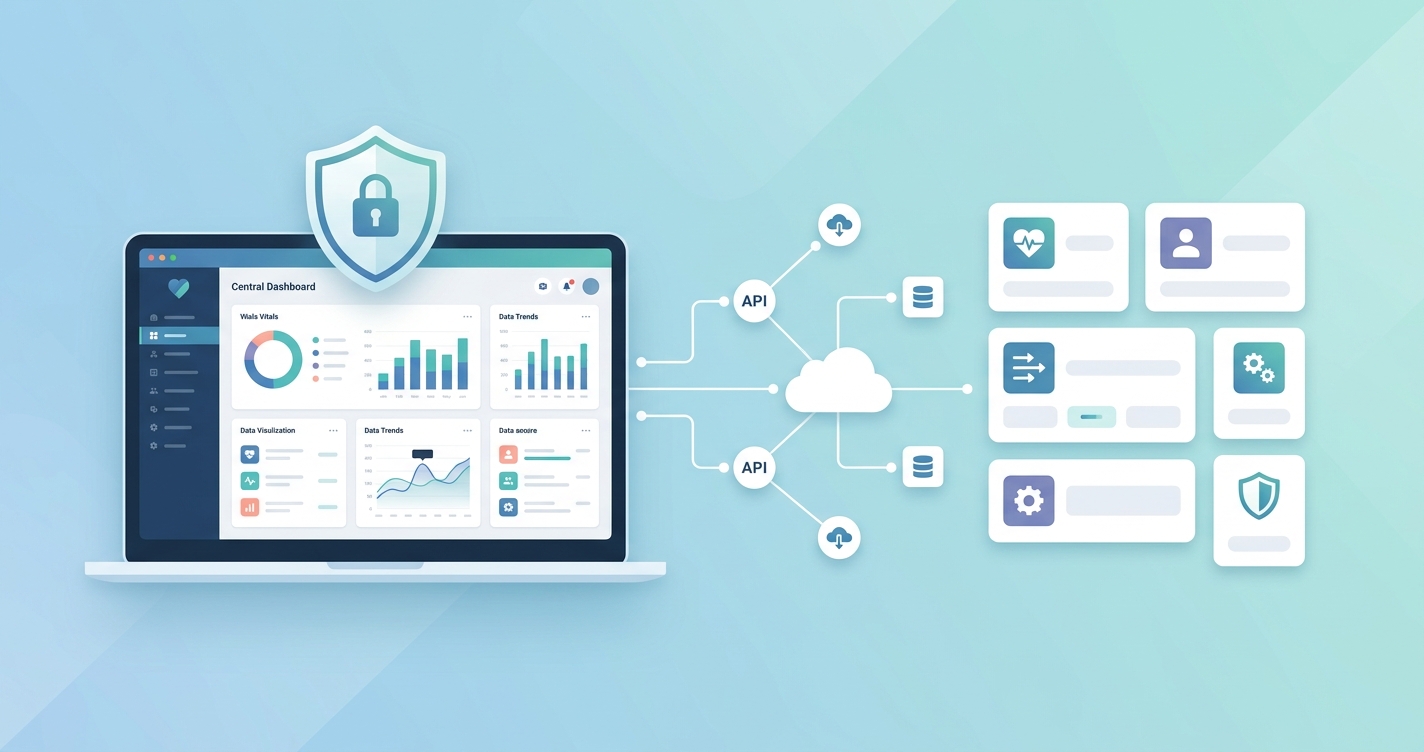
When procurement teams start asking about enterprise white label vitals platform features, they are usually past the demo stage. The question is no longer whether a branded platform can look polished. It is whether the product can survive security review, fit into existing health IT, and give operators enough control to launch across business units without creating operational chaos. For digital health founders, telehealth product leaders, and hospital IT teams, the enterprise bar in 2026 looks a lot higher than it did even two years ago.
"Progress in digital health is driven by optimization, not just expansion." — CHIME Digital Health Most Wired National Trends Report 2025
Enterprise white label vitals platform features: what buyers are actually screening for
Enterprise buyers rarely evaluate a white-label vitals platform as a standalone app. They evaluate it as infrastructure. That changes the feature list.
The AICPA's SOC 2 framework still anchors a lot of vendor diligence because Security is mandatory and larger buyers increasingly want Type II evidence, not just a questionnaire. At the same time, ONC's HTI-1 final rule is pushing U.S. health IT buyers toward stronger API expectations and USCDI v3 support by January 1, 2026. Add CHIME's 2025 finding that cybersecurity, analytics, and interoperability remain top digital maturity domains, and the pattern gets pretty clear: enterprise buyers want platforms that can be governed, integrated, and scaled.
The five features that keep showing up are not flashy. They are the things that reduce implementation risk.
| Feature enterprise buyers expect | Why it matters | What buyers usually ask for |
|---|---|---|
| Identity and access controls | Limits risk across internal teams, partners, and clients | SSO, MFA, RBAC, audit logs, session controls |
| Interoperability layer | Keeps the platform from becoming another silo | APIs, FHIR readiness, export options, EHR connection points |
| Tenant and brand configuration | Supports multiple customers, departments, or product lines | Multi-tenant controls, branding options, configurable workflows |
| Operational analytics and alerting | Makes the platform usable after launch, not just during onboarding | Dashboards, threshold settings, usage metrics, alert governance |
| Security and compliance evidence | Shortens procurement cycles and reduces trust friction | BAA terms, SOC 2, hosting details, subprocessor transparency |
That table sounds basic, but I think that is the point. Enterprise procurement tends to reward boring reliability over clever product theater.
1) Identity and access controls that map to real organizations
A white-label vitals platform may be sold to one buyer, but it usually ends up serving many user groups: clinical teams, operations staff, customer-success teams, partner admins, and sometimes employer or payer stakeholders. If access controls are weak, the whole deployment starts feeling fragile.
George A. Gellert, working with Imprivata, studied single sign-on and access management across 55 urban hospitals in the UK and Ireland between 2018 and 2024. His findings, published in Advances in Health Information Science and Practice, tied SSO and access management to time savings and better security control in complex care environments. Enterprise buyers read that kind of evidence and draw a practical conclusion: a platform that cannot plug into identity workflows will create adoption drag.
At minimum, buyers now expect:
- SSO support for enterprise identity providers
- MFA compatibility where policy requires it
- role-based access control by department or customer tier
- audit trails for administrative changes and user activity
- automated deprovisioning or clean offboarding workflows
This is one of those places where product teams sometimes overcomplicate things. Buyers are not asking for exotic permissions models. They want access to make sense.
2) Interoperability that goes beyond a marketing slide
A branded vitals product may launch as a patient-facing experience, but eventually someone asks how the data moves. That is where weak platforms start to wobble.
The ONC HTI-1 final rule made USCDI Version 3 the baseline for certified health IT on January 1, 2026, and the rule continues to reinforce API-based exchange expectations. A white-label vendor is not necessarily the certified EHR, but enterprise buyers still absorb the same policy pressure. If their stack is moving toward cleaner exchange, they expect partners to move with it.
What buyers usually want here is straightforward:
- documented APIs
- export paths for vitals and user data
- sensible integration points for EHR, CRM, or care-management systems
- a clear answer on whether FHIR-based workflows are supported or planned
- implementation boundaries that do not turn every connection into custom work
CHIME's 2025 report is useful on this point because it frames interoperability less as technical connectivity and more as usable data. That is exactly how enterprise teams think about it. An API that exists but cannot support downstream workflows does not count for much.
3) Multi-tenant architecture and brand controls that can scale
White-label buying usually starts with branding. Enterprise buying does not stop there.
A platform may need to serve multiple employer programs, separate clinic groups, payer populations, or regional business units. That means buyers want tenant separation, permission boundaries, and configuration flexibility without rebuilding the product for each deployment.
The 2022 JMIR Formative Research systematic review of telehealth business models reviewed 4,998 records and included 23 studies. The authors found that value proposition, financial structure, and operational design all shape telehealth model success. That matters here because multi-tenancy is not only an architecture choice. It is a business model choice. It determines whether one platform can support multiple revenue lines without collapsing into services-heavy customization.
Enterprise buyers tend to look for:
- tenant-level branding and domain configuration
- configurable dashboards and thresholds per customer or program
- separation between global admin settings and local admin settings
- reusable workflows that do not require code changes for every rollout
- a path to add new branded deployments quickly
This is where a white-label vitals platform either feels like a true platform or just a disguised single-instance product.
4) Operational analytics and alerting that help teams run the thing
One thing I keep seeing in enterprise software evaluations: nobody wants a platform that looks complete but becomes opaque after launch.
CHIME's 2025 work puts analytics and data management near the center of digital maturity, and KLAS's 2025 reporting on healthcare IT investment trends points in the same direction. Organizations are still buying software, yes, but they are increasingly buying for measurable operational effect. That means a vitals platform needs reporting and controls that support day-to-day management.
The expected feature set usually includes:
- dashboards for usage, completion, and engagement
- configurable threshold and alert settings
- program-level reporting by tenant or location
- visibility into failed scans, missing data, or workflow drop-off
- exportable reports for internal review
This feature category often gets treated like a nice-to-have. For enterprise buyers, it really is not. If a product cannot help them understand adoption, exceptions, and workflow performance, the burden shifts back onto the operator.
5) Compliance evidence that speeds up procurement instead of stalling it
Enterprise buyers do not just want a platform to be secure. They want the vendor to prove it in a format procurement can work with.
That is why SOC 2 keeps appearing in deals even though it is not a healthcare law. The AICPA Trust Services Criteria give buyers a standardized way to review controls around security, availability, confidentiality, processing integrity, and privacy. In healthcare, the legal layer still matters too. HHS OCR has long made clear that a cloud provider maintaining ePHI can be a business associate under HIPAA. So buyers ask for both the security packet and the contract language.
A serious white-label vitals platform usually needs to answer questions about:
- SOC 2 status and report type
- BAA readiness
- hosting regions and data residency options
- subprocessor transparency
- incident response process
- encryption, logging, and retention policies
This is not glamorous product work, but it is often what gets a deal over the line.
Industry applications
Digital health startups selling to enterprises
Startups usually care about launch speed first. Their buyers care about whether the product can survive security review. That gap is exactly why enterprise-ready controls matter early.
Telehealth and RPM operators
These teams often need a branded experience that still connects to care workflows, CRM systems, and escalation processes. Integration and alert governance matter more than cosmetic branding.
Hospital and health-system innovation teams
Hospitals tend to ask harder questions about identity, data movement, and governance. A white-label vitals platform that feels too consumer-style usually struggles here.
Current research and evidence
The evidence base is not really about one feature. It is about a broader shift in buyer behavior.
CHIME's Digital Health Most Wired National Trends Report 2025 found that optimization, governance, and workflow integration now define digital maturity more than simple expansion. The report also noted an 84.2% average adoption rate of critical security controls. That helps explain why enterprise buyers have become less patient with vague platform claims.
George A. Gellert's work with Imprivata gives a useful case for identity and access features in complex provider environments. The 2022 JMIR Formative Research systematic review helps explain why enterprise buyers judge platform structure through an operating-model lens, not just a feature checklist. ONC's HTI-1 final rule adds the policy backdrop, especially around interoperability and USCDI v3.
| Source | Key finding | What it means for buyers |
|---|---|---|
| CHIME Digital Health Most Wired 2025 | Digital maturity now depends on governance, integration, analytics, and cybersecurity | Buyers want platforms that operate well after launch |
| AICPA Trust Services Criteria | SOC 2 reviews center on Security, Availability, Processing Integrity, Confidentiality, and Privacy | Standardized compliance evidence helps procurement move faster |
| ONC HTI-1 Final Rule | USCDI v3 becomes the baseline for certified health IT by January 1, 2026 | Interoperability expectations are rising across the stack |
| George A. Gellert / Imprivata study | SSO and access management improved workflow and security in 55 hospitals | Identity controls are part of enterprise usability, not just security |
| JMIR Formative Research systematic review (2022) | Telehealth success depends on business model and operating design, not features alone | Multi-tenant architecture and configurability shape commercial viability |
The future of enterprise white-label vitals platforms
I do not think enterprise buyers are becoming harder to please just for the sake of it. The software is moving closer to core operations, so the checklist is getting more realistic.
The next phase probably looks like this:
- stronger default identity controls
- more API-first implementation packages
- deeper tenant governance for multi-brand deployments
- better operational analytics for customer teams
- cleaner procurement artifacts for security and compliance reviews
In other words, the enterprise white-label vitals platform is maturing from a branding shortcut into a governed product layer.
Frequently asked questions
What are the most important enterprise white-label vitals platform features?
The short list is identity and access control, interoperability, multi-tenant configuration, operational analytics, and compliance evidence that procurement can verify.
Why do enterprise buyers care so much about SSO and RBAC?
Because the platform has to fit the organization's real structure. Without SSO and role-based access control, adoption slows down and security review gets harder.
Is branding still important in a white-label vitals platform?
Yes, but branding alone is not enough. Enterprise buyers usually care more about governance, integration, and operational control once the buying process gets serious.
Do white-label vitals platforms need interoperability support even if they are not EHRs?
Usually yes. Buyers still expect export paths, APIs, and credible integration options so the platform does not create another isolated data stream.
If your team is comparing branded health platform options, solutions like Circadify Custom Builds are designed for teams that want white-label flexibility without giving up enterprise controls.
Related reading on this site: White-Label Health Platform Compliance: HIPAA, SOC 2, Data Residency, What Is Multi-Tenant Architecture? Health Monitoring Platforms Explained, and How to Evaluate White-Label Health Technology Partners.